Biophilic Design as a Business Imperative in Urban India

India’s rapidly urbanising workforce is spending more time indoors than any previous generation, in cities where outdoor air quality is often dangerous and green space is scarce. Biophilic design is no longer a luxury aesthetic  it is a compensatory health strategy, and a measurable talent retention tool.

The business case for nature-integrated interiors in India is particularly strong. Urban India suffers from some of the world’s most severe ambient air pollution  making clean, plant-filtered indoor environments even more valuable than in other markets. The urban heat island effect in cities like Mumbai, Delhi, Chennai, and Bengaluru is intensifying each summer, driving greater dependency on sealed, air-conditioned interiors that, without biophilic interventions, become sensory deserts.

GCCs and large IT campuses which represent the most significant segment of India’s office market, absorbing over 32 million sq ft in 2025 alone (CBRE, March 2026) are investing in biophilic fit-outs as a deliberate talent strategy. Post-COVID, global studies confirm that natural light and views of vegetation rank above cafeterias, fitness centres, and childcare in employee workplace-selection decisions. For Indian employees choosing between GCC employers competing for the same technical talent pool, workspace quality is a genuine differentiator.

 

Research consistently shows that biophilic design environments lift productivity by 15%, reduce absenteeism by up to 40%, and command 7–8% rental premiums in competitive markets. India’s traditional architecture has always understood this the courtyard, the jaali, the verandah, the water body biophilic design is, in many ways, a return to indigenous wisdom applied at corporate scale.

India Design Context

India’s traditional architectural repertoire, the Mughal garden, the Chettinad courtyard, Rajasthani jalis  is a deep wellspring of biophilic precedent. Contemporary Indian offices like Infosys Mysore Campus and Suzlon One Earth demonstrate that biophilic design at scale is entirely achievable within Indian construction budgets and climatic conditions.

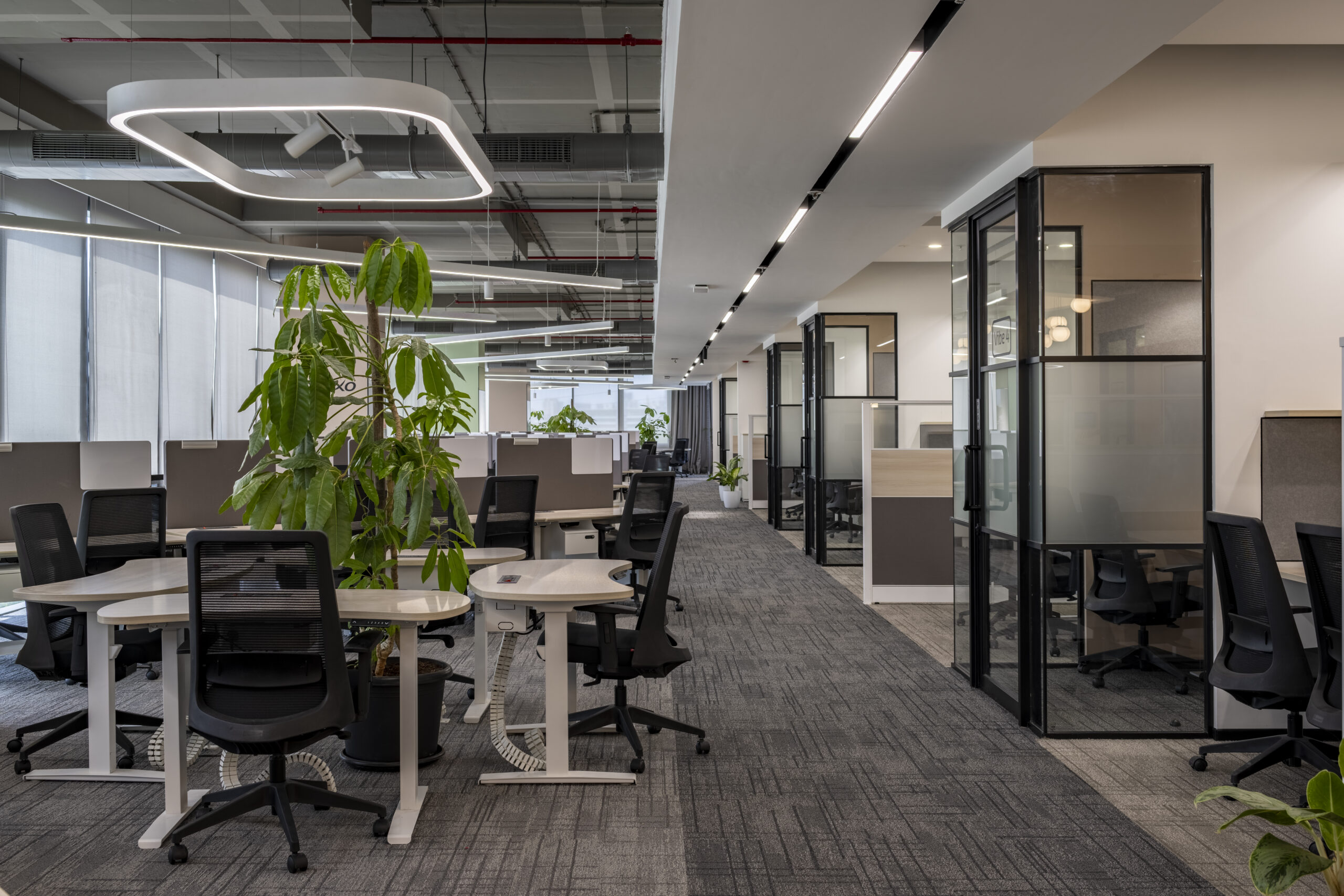
Living walls and planters: native Indian species (Areca palm, snake plant, money plant) are low-maintenance, highly effective air purifiers in Indian climates

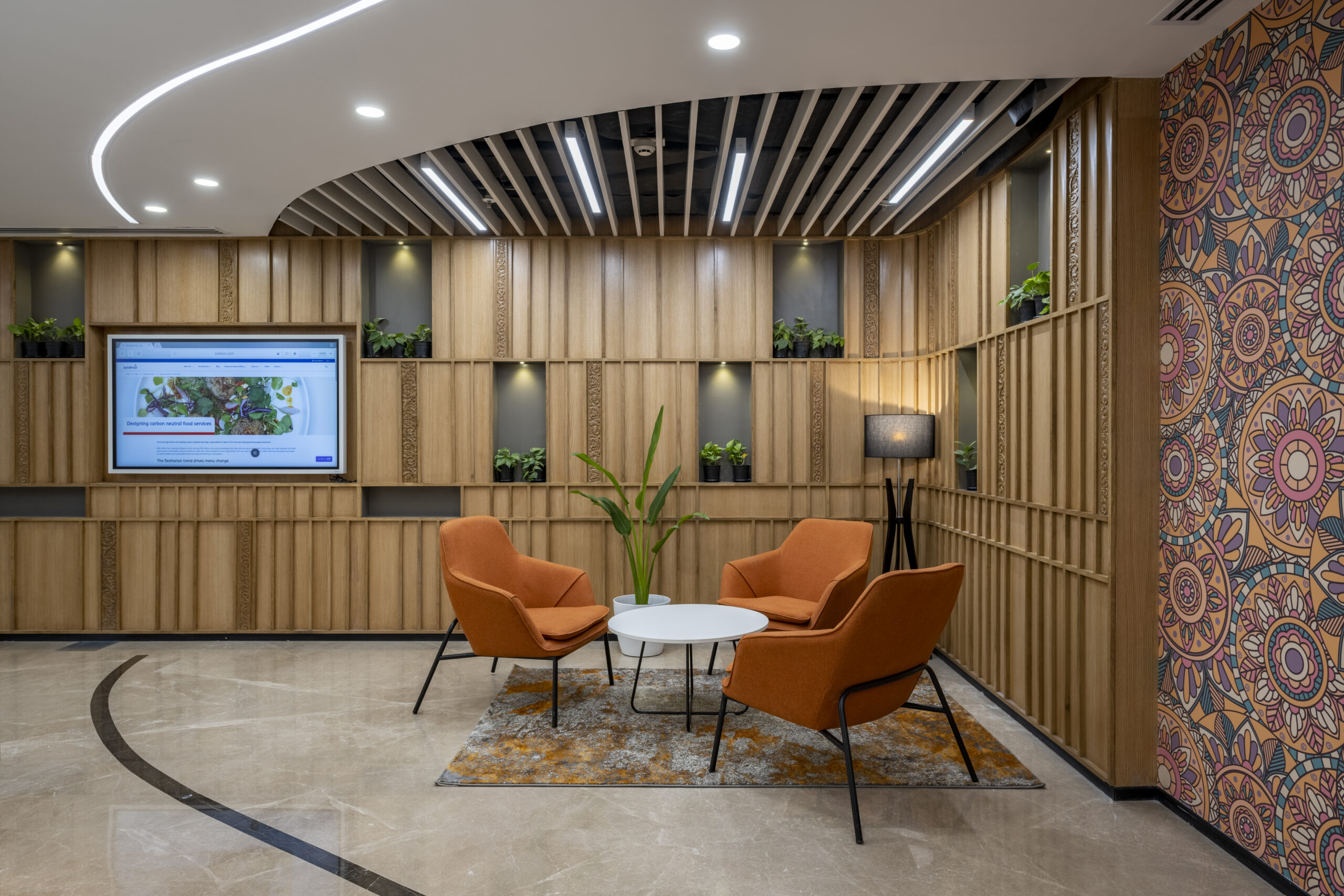
Jali-inspired screens and perforated panels create dappled light patterns that activate the same neurological responses as natural foliage

Natural materials reclaimed teak, Kota stone, cane, rattan bring authentic texture and reduce synthetic off-gassing simultaneously

Courtyard-inspired atria and sky-lit break zones address India’s urban employee’s acute deprivation of natural light during 9-hour office days

₹2,000+saved per employee annually when nature views are integrated into office design — through reduced absenteeism and productivity gains (Terrapin Bright Green). For a 500-person Indian GCC, this exceeds ₹10 crore of annual value.

Eleganz Perspective

We present biophilic ROI modelling alongside every commercial design proposal translating wellness investment into retention savings specific to the client’s headcount. For Indian organisations where attrition costs run to 1.5–2× annual salary, a ₹30 lakh biophilic fit-out enhancement routinely saves ten times its cost in the first year of operation.

share this blog

Ready to start your project? Connect with Eleganz seamlessly.

Contact Info
UP

Amazon

Lorem Ipsum is simply dummy text of the printing and typesetting industry. Lorem Ipsum has been the industry's standard dummy text ever since the 1500s, when an unknown printer took a galley of type and scrambled it to make a type specimen book. It has survived not only five centuries

Amazon

Lorem Ipsum is simply dummy text of the printing and typesetting industry. Lorem Ipsum has been the industry's standard dummy text ever since the 1500s, when an unknown printer took a galley of type and scrambled it to make a type specimen book. It has survived not only five centuries