
Wellness at Work: Interiors That Enhance Health, Culture, and Organisational Performance
The Wellness Imperative in Indian Workplaces
India’s urban professionals work in some of the most demanding environmental conditions in the world. Long commutes — often exceeding two hours each way in Mumbai, Bengaluru, and Delhi NCR — combine with high-density living, metropolitan air quality challenges, and intense professional pressure to create a context in which the physical office environment is one of the few variables over which an organisation has direct control.
The evidence for the business value of investing in that control is substantial and growing. Research published by the Indian Institute of Human Settlements in 2025 found that integrating natural elements into office environments can improve employee mental well-being by up to 21 percent and reduce workplace stress by 34 percent. A widely cited study shows that biophilic office design boosts productivity by 15 percent. In the context of India’s competitive talent market — where retaining skilled professionals represents one of the most significant cost challenges facing knowledge-economy organisations — these figures carry direct financial significance.
Workplace wellness design is not, in this framing, an altruistic investment in employee experience. It is a measurable business strategy with quantifiable returns in productivity, retention, and organisational culture.
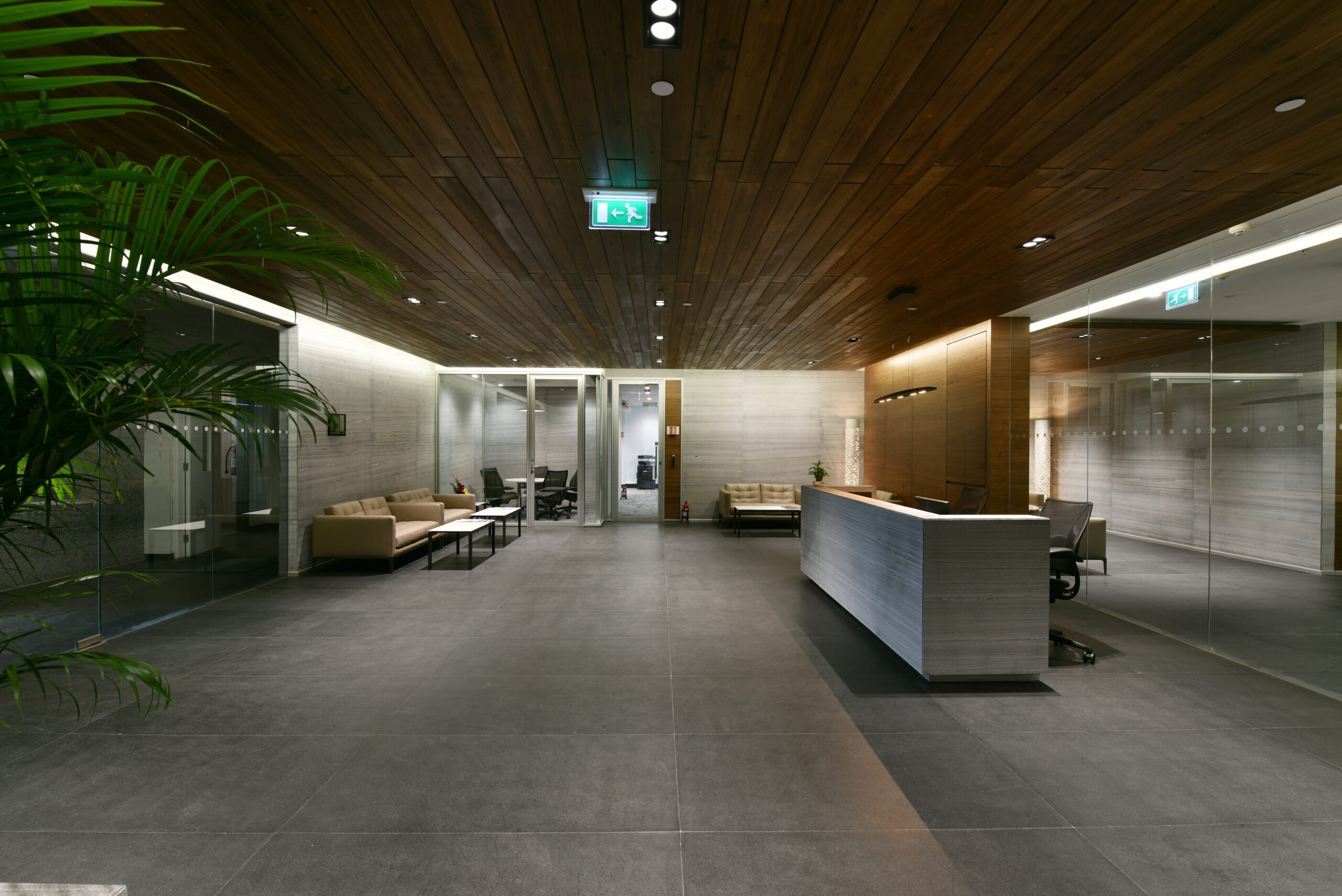
Indicative fit-out cost premium for a wellness-grade Cat B specification over baseline Cat B in India 2026: 7–12 percent. Drivers: low-VOC paints/adhesives/laminates, FSC timber, ergonomic height-adjustable workstation systems, biophilic landscape installations, acoustic-pod provision, and HEPA-grade air-handling. The ROI on this premium is measurable: lower absenteeism, higher retention, faster ramp-up of new hires.
Rethinking What Wellness Means in an Office Context
The wellness dimension of office design is sometimes reduced to a single element — the addition of indoor plants, or the installation of a standing desk option. Effective workplace wellness design is considerably more holistic, addressing the physical, cognitive, social, and environmental dimensions of the experience of work.
A genuinely wellness-oriented office design integrates five interconnected pillars, each of which addresses a distinct aspect of the human experience of the workplace environment.

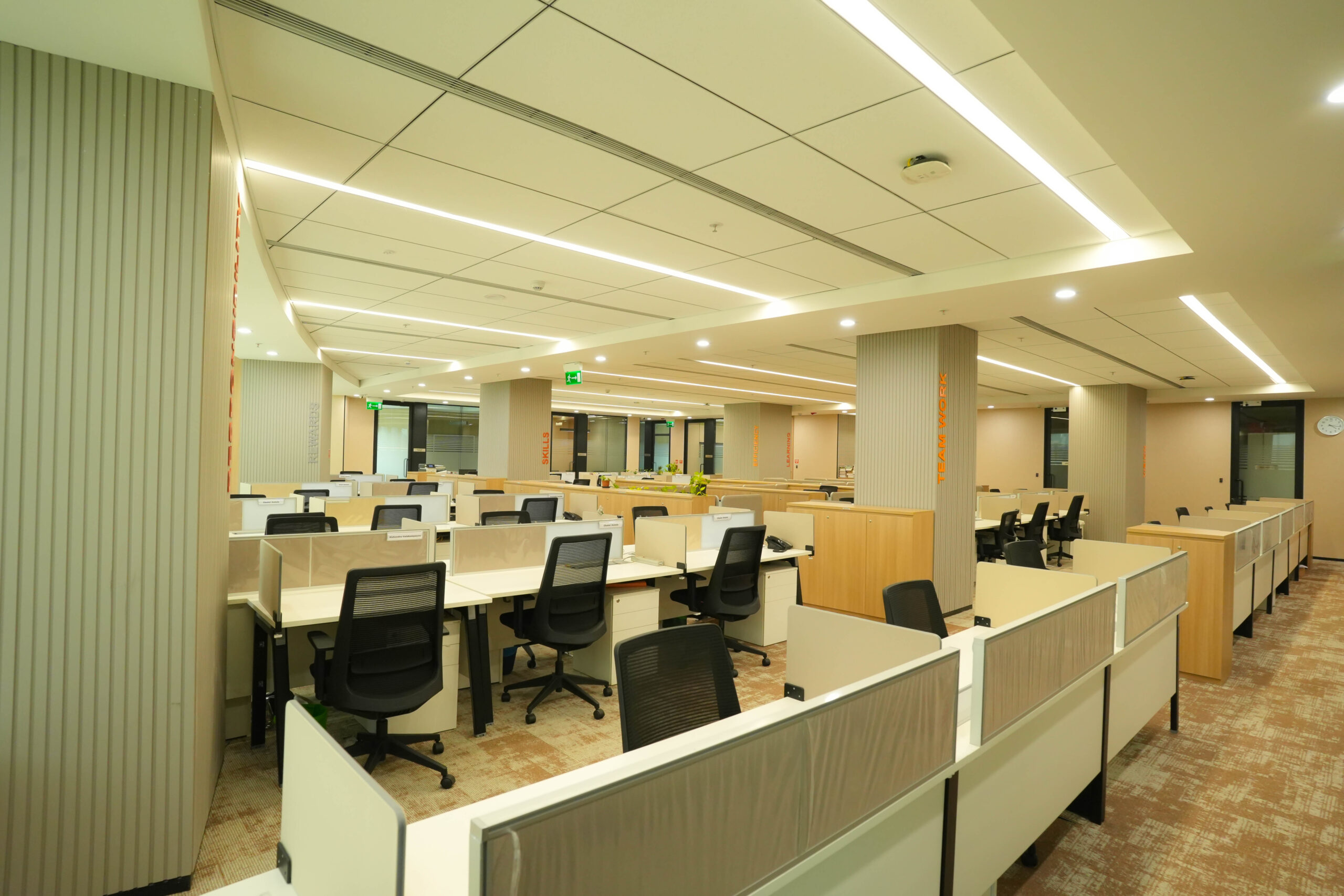
Rethinking What Wellness Means in an Office Context
Pillar 1: Biophilic Design — The Nature Connection
Biophilic design is the systematic integration of natural elements, patterns, and processes into the built environment to satisfy the deep human affinity for the natural world. In an office context, biophilic design encompasses a range of interventions at different scales and cost points.
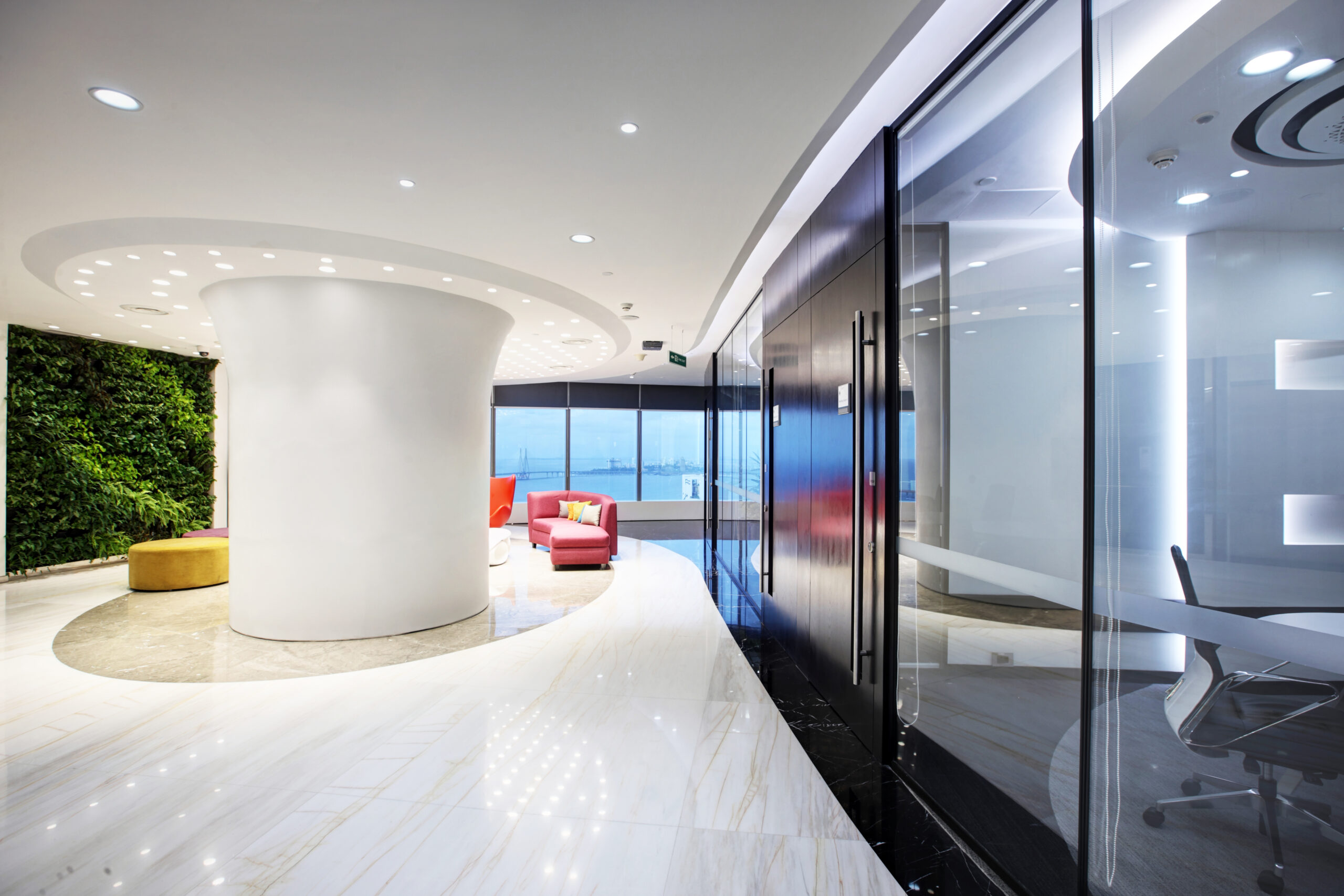
Living walls — vertical installations of curated plant species maintained by automated irrigation systems — are the most visible and impactful biophilic element available in large-format commercial interiors. In reception areas and central atria, they create an immediate and powerful sensory anchor that communicates the organisation’s investment in human environment. Natural stone and timber accent elements at material junctions, indoor trees in social zones, and the systematic use of organic forms and textures throughout the material palette extend the biophilic principle into every corner of the space.
Natural light is the most fundamental biophilic element of all. Office layouts that maximise workstation proximity to perimeter glazing, supplement with skylights where building configuration allows, and avoid the deep open-plan configurations that leave central areas entirely dependent on artificial lighting deliver a circadian benefit to occupants that goes beyond aesthetics.
Pillar 2: Ergonomic Infrastructure
The physical impact of poor ergonomics on employee health, productivity, and absenteeism is well-established. Musculoskeletal disorders associated with inadequate workstation design are among the most common occupational health presentations in knowledge-economy workplaces.
Height-adjustable desks that allow smooth transition between seated and standing positions, ergonomic task chairs with lumbar support and adjustable armrests, monitor arm systems that enable precise screen height and distance positioning, and keyboard trays that maintain neutral wrist position are the foundational ergonomic provisions that should be standard across all workstation types in a modern Indian office — not premium options available only at senior grade levels.
Ergonomic provision should also address the full range of postures and positions that knowledge workers adopt. Comfortable lounge seating for informal work, acoustic booths with appropriate desk height for focused individual tasks, and height-appropriate collaboration furniture all contribute to a workplace that supports the physical health of its occupants across the full range of tasks they perform.
Pillar 3: Air Quality
Indoor air quality in Indian offices is a more significant concern than in many other markets, for two reasons. First, external air quality in India’s major metropolitan areas is frequently poor, meaning that the office must provide a genuinely better air environment — not merely an equal one. Second, the conventional specification for many Indian offices includes adhesives, paints, laminates, and carpet products with elevated VOC content that compounds internal air quality challenges.
A wellness-oriented approach to air quality addresses both dimensions. Low-VOC specifications for all adhesives, paints, and surface materials eliminate the primary indoor source of air quality degradation. HEPA filtration systems in HVAC and supplementary air purification units in high-occupancy zones address particulate matter and biogenic contaminants. CO2 monitoring in meeting rooms — with real-time display and automated ventilation response — manages the cognitive impact of accumulated CO2 in densely occupied enclosed spaces, where levels can rise sufficiently to measurably impair decision-making quality within a standard meeting duration.
Pillar 4: Acoustic Wellness
Noise consistently ranks as the most frequently cited workplace complaint across all sectors and organisational types. In open-plan offices — the dominant configuration in India’s Grade A commercial market — uncontrolled speech and ambient noise create chronic distraction that Research consistently associates with elevated stress, reduced productivity on cognitively demanding tasks, and increased error rates.
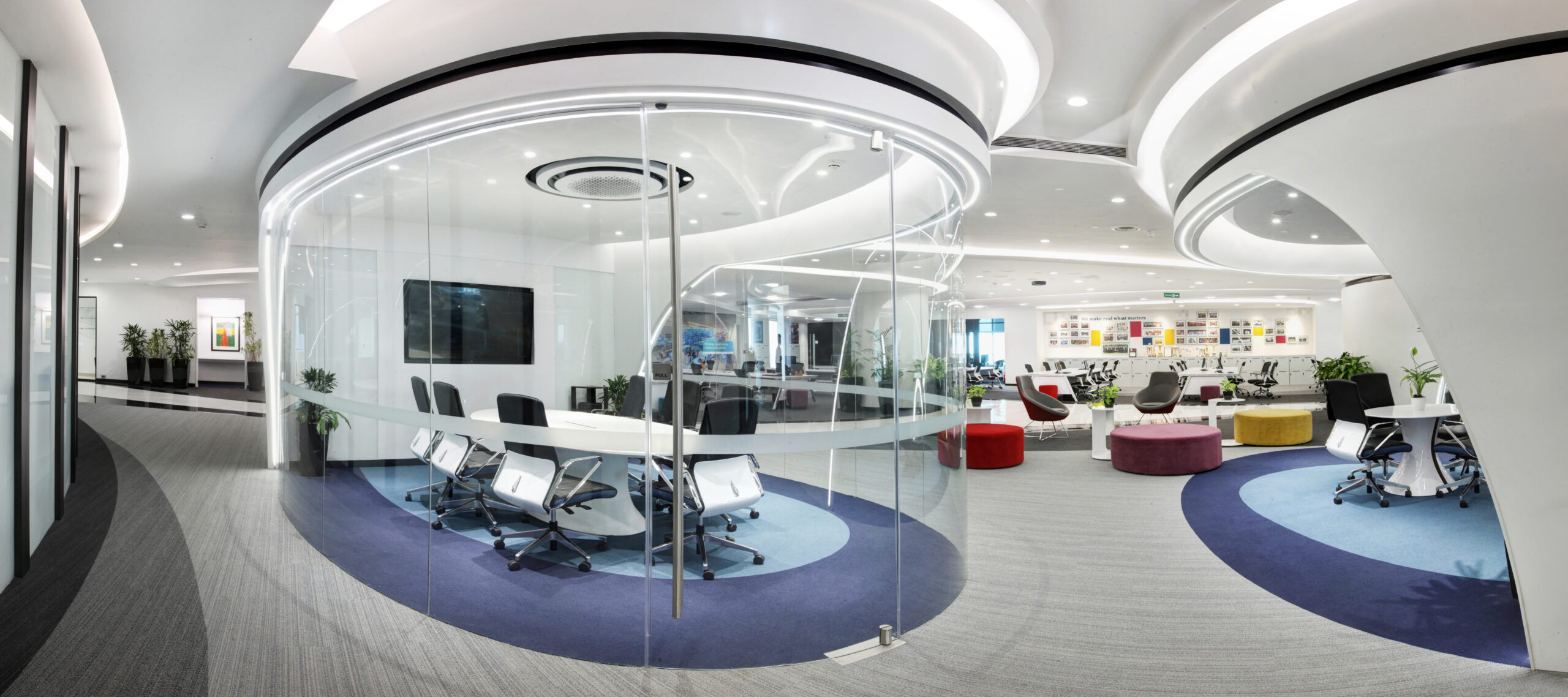
Acoustic wellness in office design addresses noise at multiple levels: acoustic panel specification for ceilings and wall surfaces that reduces reverberation and ambient noise energy, phone booths and individual acoustic pods for private calls and focused work, zoned layout planning that physically separates high-noise collaboration zones from quiet focus areas, and soft flooring materials in circulation areas that reduce impact noise transmission.
Pillar 5: Dedicated Wellness Zones
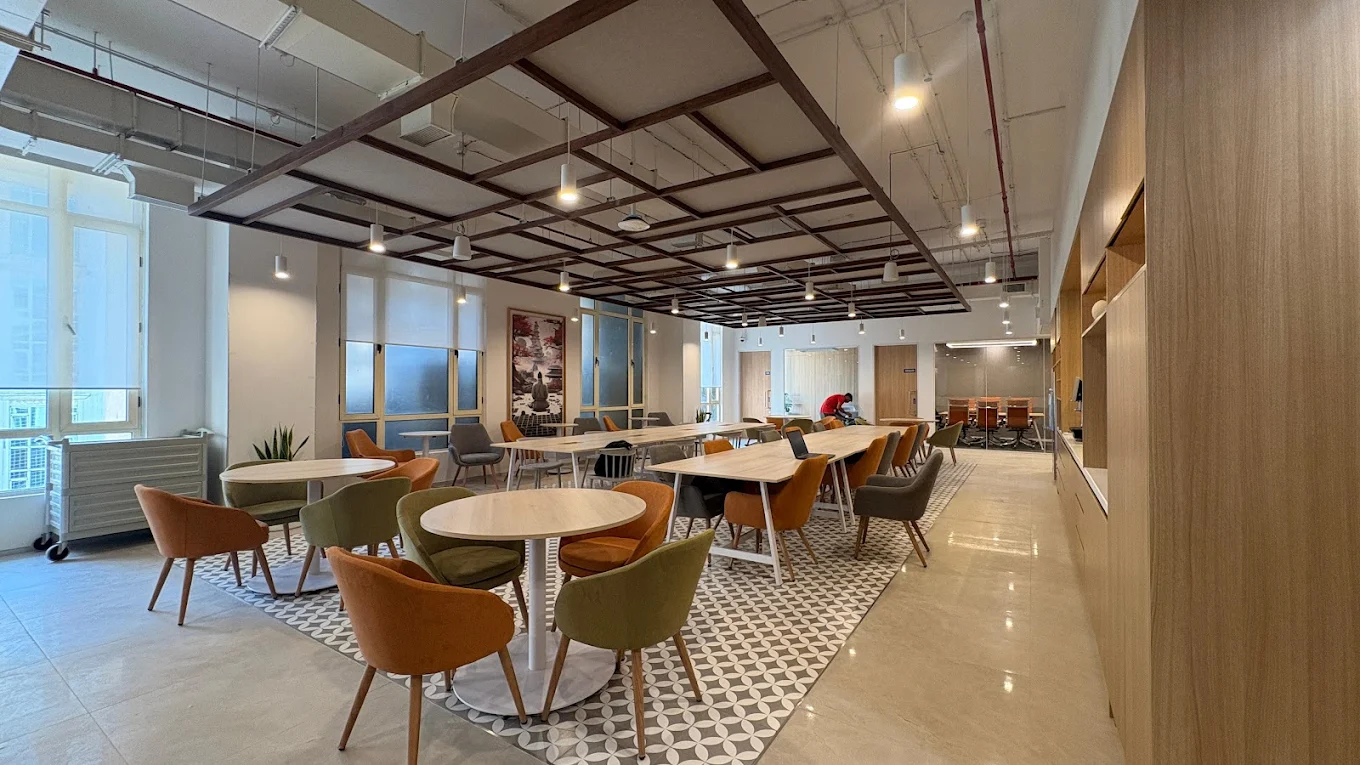
The most visible commitment an organisation can make to employee wellness is the allocation of dedicated space for activities and experiences that are not directly productive — meditation rooms, yoga spaces, relaxation lounges, nutrition-focused pantry provisions, and outdoor terrace access where the building configuration allows.
These provisions communicate a straightforward message to employees: that the organisation views their wellbeing as an organisational priority rather than a personal matter. This message — when delivered consistently through both physical provision and cultural practice — is one of the most powerful retention instruments available to organisations competing for talent in India’s major knowledge-economy cities.
15% productivity boost from biophilic office design (multiple research studies, 2025)
21% improvement in employee mental well-being from integrating natural elements (Indian Institute of Human Settlements, 2025)
34% reduction in workplace stress from biophilic design integration (Indian Institute of Human Settlements, 2025)
The Eleganz Perspective on Wellness-Oriented Design
Eleganz Interiors approaches wellness not as a decorative trend but as a design discipline to be pursued systematically. Our projects for clients including P&G, Brookfield Properties (Aerobode One), and Capita India have demonstrated that the five pillars of workplace wellness can be integrated within a commercially disciplined pure design-and-build process — delivering measurable improvements in employee experience without compromising programme or budget. Across 38 years of practice, 1,000+ projects, and 40 million-plus sqft delivered, biophilic and ergonomic specification is now part of our default toolkit, not a premium add-on.
Our materials library and specification protocols reflect a commitment to low-VOC, biophilic, and ergonomically informed design across our full portfolio. As an IGBC founding member with multiple LEED Platinum and Gold projects, our wellness specification is fully aligned to the certification frameworks that ESG-reporting clients depend on — delivered consistently across our seven offices: Mumbai, Bengaluru, Hyderabad, Chennai, Delhi NCR, Pune, and Singapore.
Wellness is not an amenity layer placed on top of a conventional office design. It is the organising principle from which a high-performing workplace is designed, from day one of the brief.