The India Workplace Design Trends Report 2026: Ten Forces Reshaping How India Works
The Context: India’s Office Market at a Historic Moment
India’s commercial workplace market closed 2025 at record volumes — across leasing, absorption, and new supply. The volume question is settled. The more useful question for an MD or facilities head is what kind of fit-out the market’s best occupiers are now commissioning into that space, and how design-and-build delivery has had to evolve to meet that bar.
GCCs and IT capability hubs continue to set the design pace for the broader market. The structural foundations behind their growth — a 350-million-person urbanisation wave over the next 25 years, the world’s youngest large professional workforce, and India’s accelerating role as the global destination for high-value knowledge work — are generational, not cyclical. The fit-out implications are equally durable.
Against this backdrop of unprecedented volume, the question that is most relevant to the organisations occupying, designing, and building India’s next generation of offices is not how much space is being leased. It is what kind of space is being demanded — and whether the design of that space reflects the forces that are actually reshaping the experience of work in India.
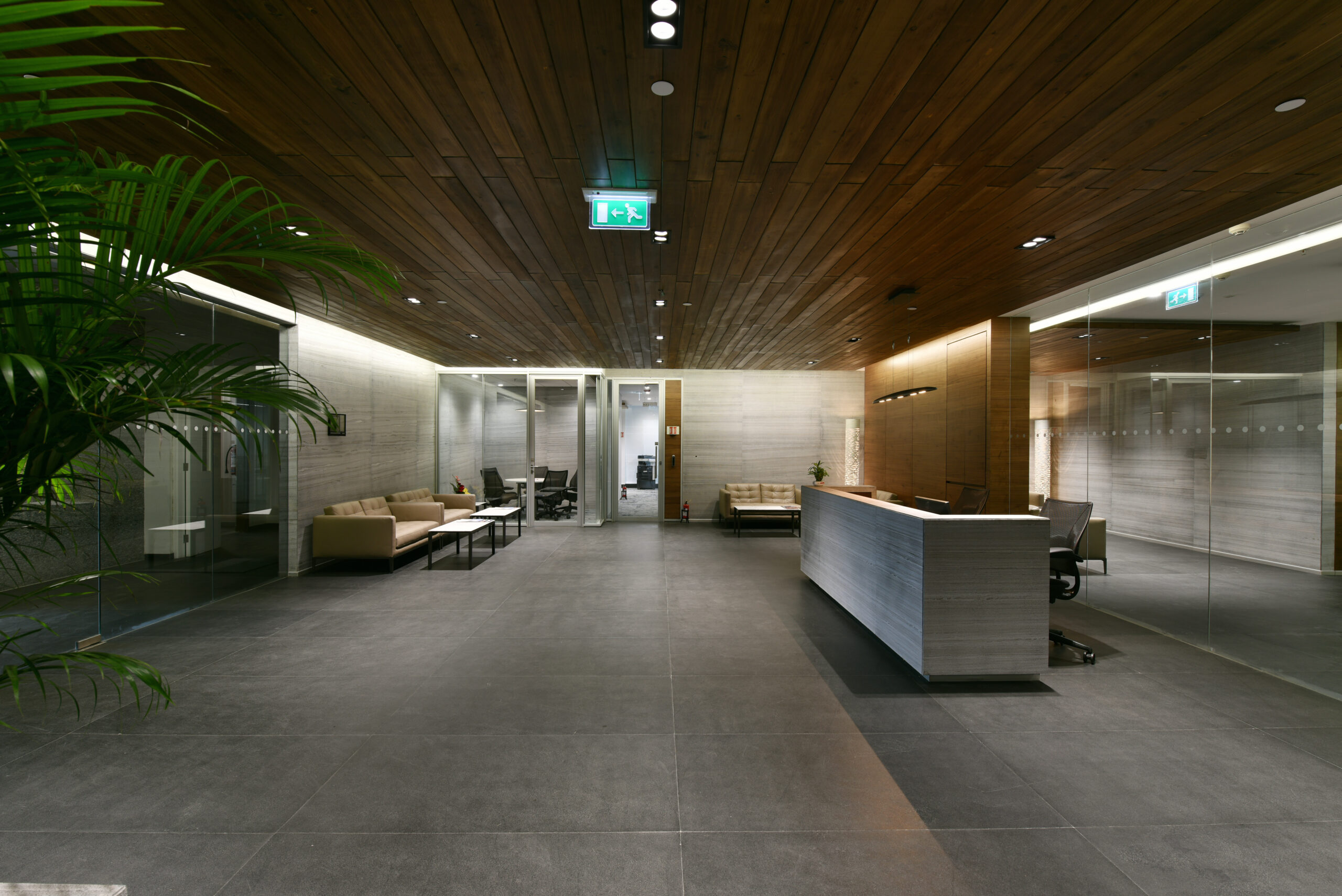
Indicative fit-out cost benchmarks for India-2026 corporate offices: GCC and IT Cat B ₹2,800–4,500/sqft; BFSI Cat B with audit-grade documentation ₹3,000–4,500/sqft; flagship HQ Cat B+ ₹4,500–7,500/sqft. Pure design-and-build delivery typically compresses TAT by 4–6 weeks on a 50,000 sqft floorplate versus fragmented consultant-and-contractor routes.
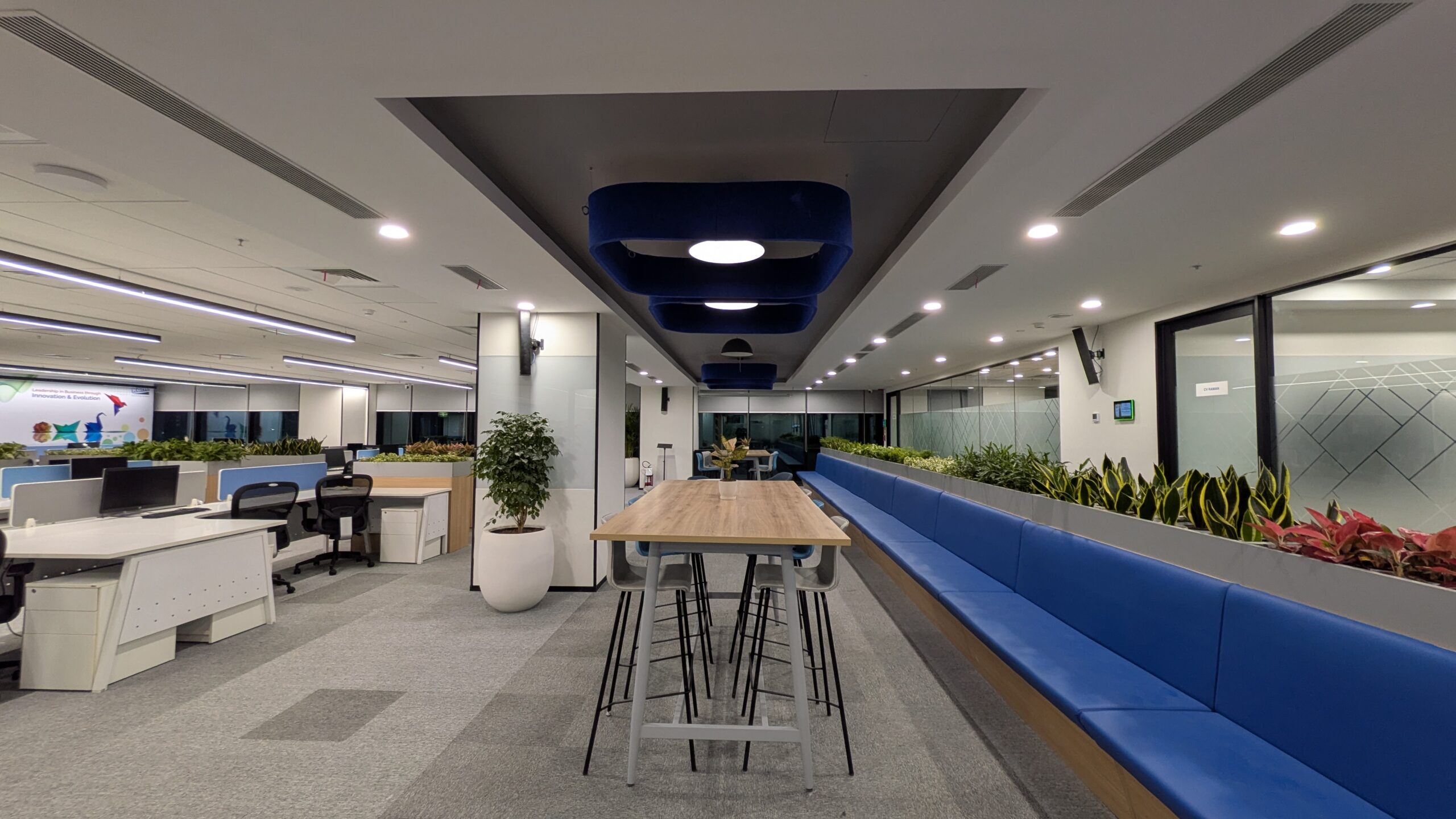
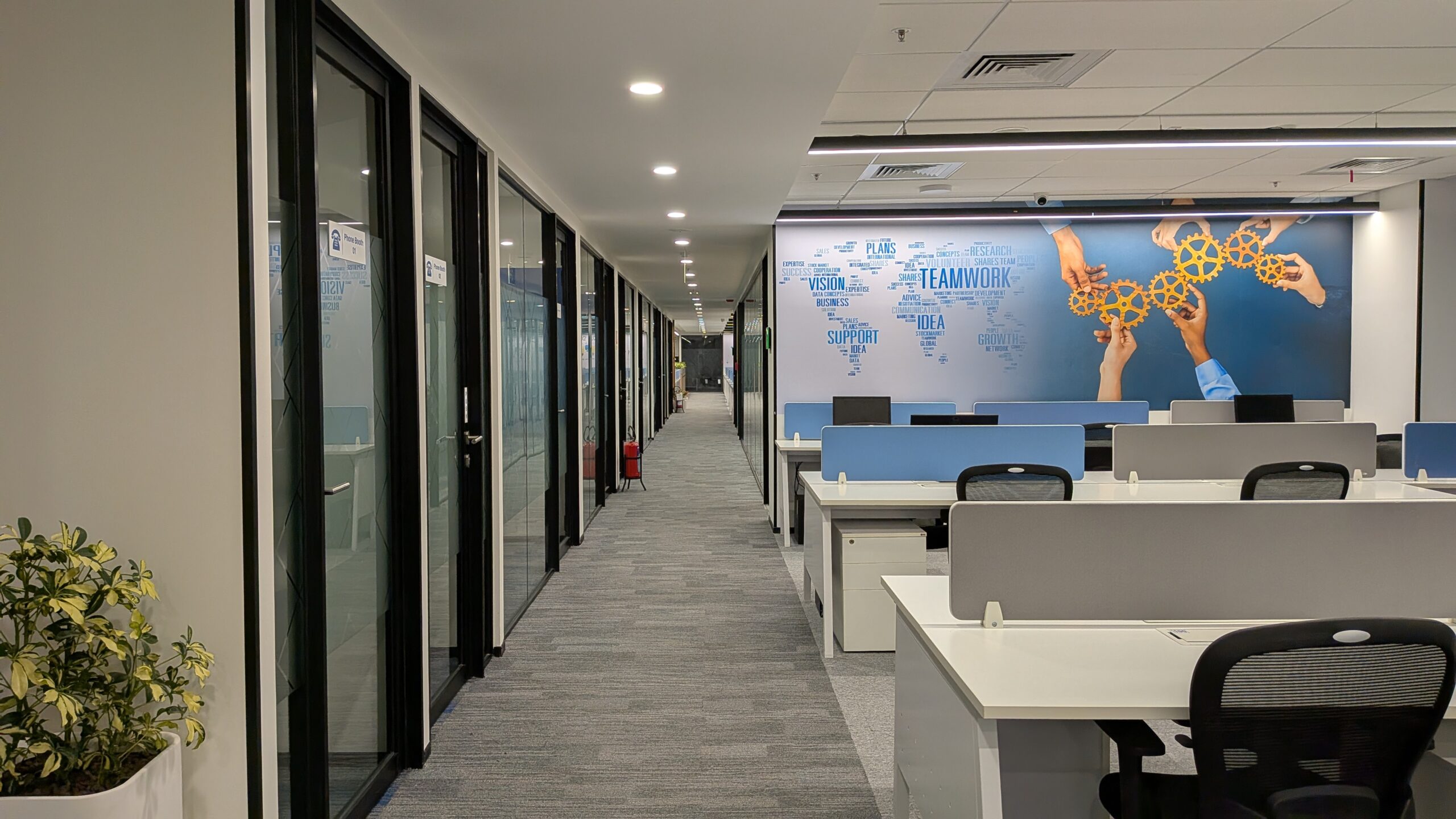
Ten Design Trends Defining India’s Workplaces in 2026
Trend 1: Hybrid-First Layouts Have Become the Baseline
Hybrid work is no longer a post-pandemic accommodation — it is the structural reality of knowledge-economy work in India. The implications for office design are permanent and significant. Desk-sharing ratios of 1:1.2 to 1:1.5 are now common in well-planned hybrid offices, with the space savings redirected toward collaboration infrastructure, wellness provision, and the social amenity that brings employees in voluntarily rather than by mandate.
The most effective hybrid-first layouts treat the office as a destination for work that is better done together rather than a container for all work. This requires diverse space typologies within the same floorplate — focus pods, collaborative hubs, social zones, and quiet rooms — rather than a uniform workstation field punctuated by conference rooms.
Trend 2: GCC-Grade Experience Is the New Talent Standard
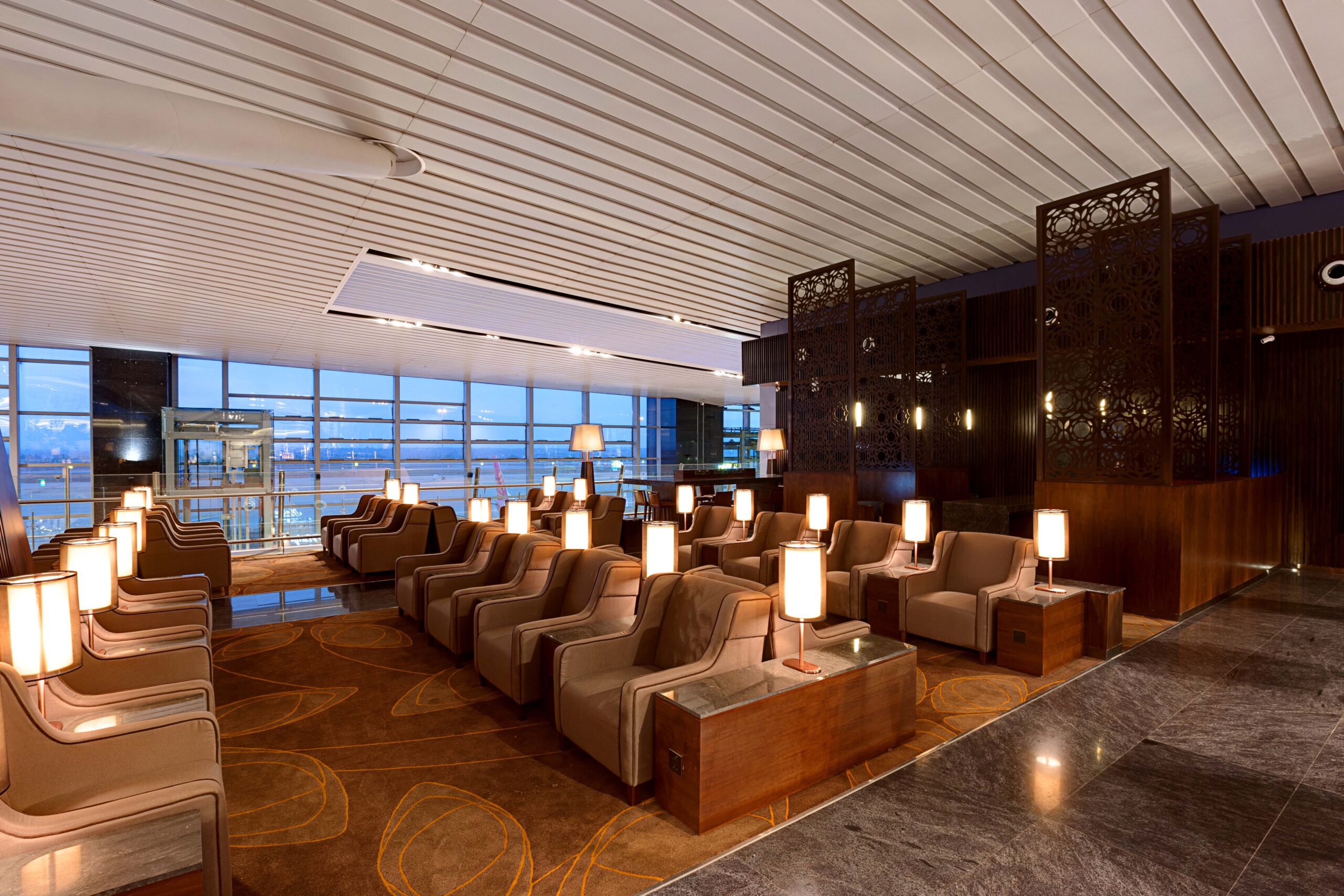
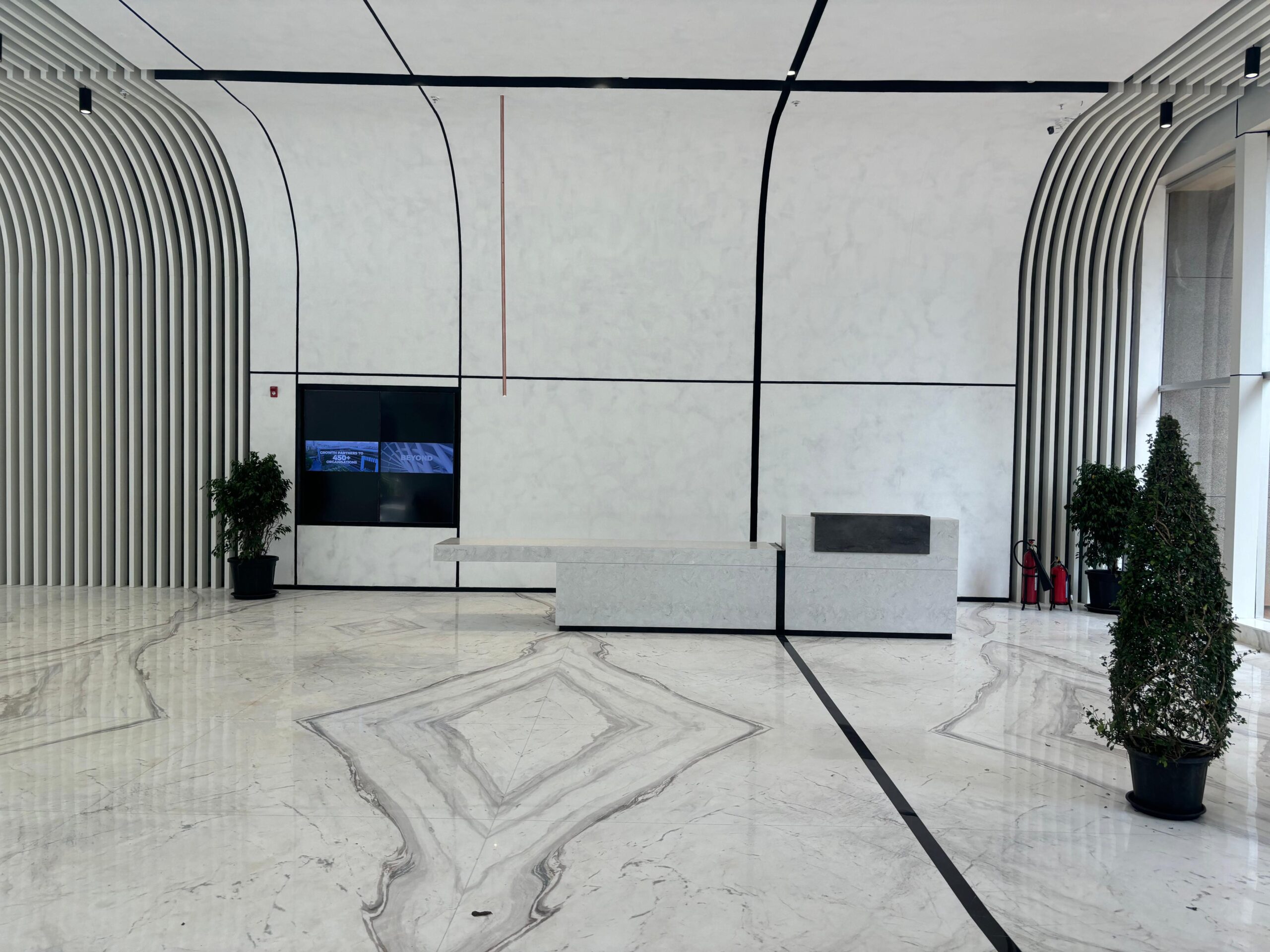
The expansion of Global Capability Centres in India has established a new benchmark for workplace quality that is increasingly felt across all sectors. GCCs, competing for the same talent pool as domestic tech firms, BFSI organisations, and professional services companies, have invested heavily in hospitality-driven workplace experiences. The fit-out implication is concrete: every Cat B GCC brief now expects barista-grade pantry, terraced outdoor access where the building permits, hospitality-grade reception, and AV-equipped collaboration rooms across at least 20–25% of the floorplate.
This preference does not disappear when those employees are recruited by non-GCC organisations. The GCC-grade office experience has become the reference standard against which talent evaluates all prospective employers.
Trend 3: AI and IoT Integration Moves From Optional to Expected
Smart-building scope is now a standard line item in serious Indian fit-out briefs — occupancy sensing, AI climate control, digital booking, predictive maintenance, AI-powered workplace analytics. Designed in from day one of a pure design-and-build brief, this scope typically lands at 4–7% of total fit-out cost. Retrofitted post-handover, the same scope routinely runs 1.8–2.5x with 4–8 weeks of disruption to live floor use.
Trend 4: Biophilic Design at Scale — From Feature to Framework
Biophilic design has moved from an aspirational feature in premium offices to a mainstream expectation across market segments. Research documenting a 15 percent productivity improvement and a 34 percent stress reduction from biophilic workplace integration has given the discipline a business case that can be presented alongside the aesthetic argument. The leading edge of biophilic design in India in 2026 is not the potted plant — it is the coordinated material palette, the living wall, the circadian lighting system, and the outdoor terrace access that together create a genuinely restorative relationship between occupants and their environment.
Trend 5: Acoustic Engineering as a Primary Design Discipline
Noise is consistently identified as the primary workplace complaint across all sectors and geographies. Open-plan offices — still the dominant configuration in Indian commercial real estate — create acoustic environments that are incompatible with the sustained cognitive work that knowledge-economy professionals perform. The best office designs of 2026 treat acoustic engineering as a primary spatial planning constraint rather than an afterthought addressed through panel specification. Zoned acoustic planning, focus pod provision, and the acoustic specification of all hard surfaces are now essential elements of any credible workplace design brief.
Trend 6: Sustainability as a Leasing Prerequisite
The market’s best-quality spaces — the buildings that attract the best talent and send the clearest signal about the organisation’s standards — are increasingly green-certified by default. Fitting out a green-certified building with a non-green fit-out is an internal contradiction occupiers are progressively less willing to tolerate. IGBC-aligned material specification, low-VOC product selection, and energy-efficient infrastructure are moving from premium options to professional standards. Eleganz is an IGBC founding member with multiple LEED Platinum and Gold workplace fit-outs delivered.
Trend 7: Flex Integration Within Corporate Portfolios
Corporate occupiers are increasingly incorporating flex workspace as a deliberate element of portfolio strategy rather than a temporary measure. The hub-and-spoke model — a premium managed hub in a central business district supplemented by flex spokes in suburban or tier-2 locations — is becoming standard for organisations managing distributed teams. The fit-out implication: a portion of the corporate-grade specification (brand, AV, acoustic, IT) needs to be replicable into the operator-managed flex sites without losing fidelity, which puts a premium on a single design-and-build accountability line covering both.
Trend 8: Cultural Identity in Office Design — The Indian Dimension
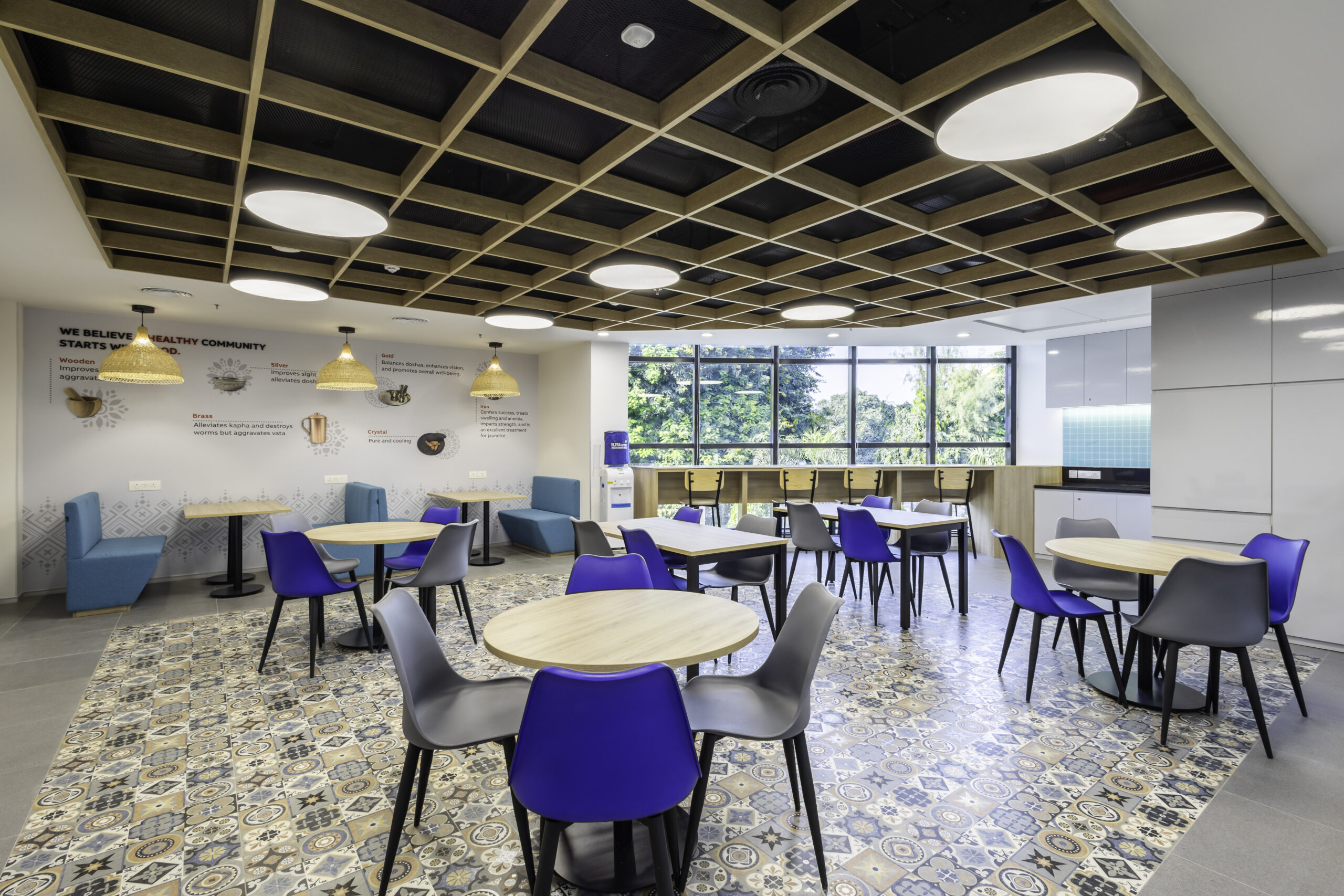
A distinguishing trend in India’s workplace design landscape in 2026 is the growing sophistication of cultural identity expression in office interiors. Global organisations establishing or expanding in India are increasingly investing in design elements that acknowledge and celebrate Indian cultural contexts — local art, traditional craft techniques interpreted in contemporary material applications, regional design vocabularies expressed through texture and colour — alongside the global workplace standards they apply universally. For domestic organisations, the office is an opportunity to anchor their cultural identity in the physical environment in a way that no brand guideline or HR policy can achieve.
Trend 9: Wellness Infrastructure as a Retention Instrument
The documented connection between workplace wellness investment and employee retention has elevated wellness provision from a discretionary benefit to a strategic talent management instrument. Organisations reporting the strongest retention outcomes in India’s competitive talent markets are consistently those that have invested in the full wellness stack: biophilic design, ergonomic infrastructure, air quality management, acoustic wellness, and dedicated wellness zones. The return on this investment — measured in reduced recruitment and onboarding cost — is calculable and significant.
Trend 10: AV and Conferencing as Architectural Infrastructure
The conferencing experience has become a defining quality signal in Indian offices. As hybrid work has made video meetings a daily operational norm rather than an occasional necessity, the quality of the AV and acoustic infrastructure in meeting rooms is experienced by every employee multiple times per day. Organisations that have invested in camera-first room design, ceiling microphone arrays, and high-bandwidth connectivity throughout their offices report measurably higher employee satisfaction with hybrid collaboration — and measurably lower friction in the global team coordination that drives GCC and consulting operations.
₹2,800–7,500 / sqft Indicative fit-out cost band across India-2026 use-cases — GCC Cat B to flagship HQ
12–18 weeks Typical pure D&B delivery TAT for a 50,000 sqft Cat B floorplate (general-contracting route adds 4–6 weeks of consultant/trade co-ordination)
Multiple LEED Platinum & Gold Eleganz delivered fit-outs across BFSI, GCC, and life-sciences clients — IGBC founding-member commitment dating back to council establishment
1,000+ projects · 40M+ sqft · 38 years Eleganz pure design-and-build practice — across seven offices in Mumbai, Bengaluru, Hyderabad, Chennai, Delhi NCR, Pune, and Singapore
The Eleganz Perspective: What These Trends Mean for Your Next Project
The ten trends documented in this report are not independent phenomena. They are interconnected expressions of a single underlying shift: the recognition, across India’s most sophisticated organisations and their workforces, that the physical office environment is a strategic instrument rather than a commodity overhead.
For Eleganz Interiors — with 38 years of pure design-and-build experience, more than 1,000 completed projects, over 40 million sqft delivered, and active operations across seven offices in Mumbai, Bengaluru, Hyderabad, Chennai, Delhi NCR, Pune, and Singapore — these trends are not abstract market observations. They are the design requirements we navigate in every brief, the specifications we implement in every project, and the outcomes we deliver for every client.
Our portfolio across BFSI clients including HDFC Bank and Bajaj Finserv, technology organisations including Amazon and NVIDIA, creative and media organisations including WPP and IPG, and professional services clients across sectors reflects the full range of requirements that India’s most demanding workplace design briefs entail. Each project is an application of the ten principles described in this report — delivered with the discipline, craftsmanship, and single-point accountability that 38 years of pure design-and-build practice produces.
The organisations that design their offices for the India of 2026 — rather than the India of 2016 — will have a structural advantage in talent, culture, and performance that will compound over the decade ahead.
References
→ CBRE India: India Office Figures Q4 2025
→ Cushman & Wakefield: India Office Market Records Historic Net Absorption of 61 MSF in 2025
→ Colliers India: 2026 India Office Outlook — Unlocking Agility, Vitality and Flight-to-Quality
→ Allwork.Space: India Office Market Grows 20% in 2025, Despite Rising AI Job Fears