
Designing Workplaces for Aviation and Logistics: The 24/7 Operations Environment
Operations That Never Stop — Offices That Must Keep Up
Aviation and logistics operations share a characteristic that distinguishes them from virtually every other commercial sector: they do not stop. Flight operations management, air cargo handling, supply chain oversight, freight forwarding coordination, and logistics network management operate continuously across multiple time zones, 365 days a year. The people who manage these operations work in shifts — early mornings, late nights, weekend rotations — in environments where the stakes of error are measured in aircraft safety margins and supply chain disruptions that cascade across global networks.
India’s logistics sector and aviation network are expanding fast under the National Logistics Policy framework, and the country is on track to be among the world’s largest aviation markets by 2030. The implication for fit-out is specific: command centres, network-operations rooms, and 24/7 dispatch floors — a category of workplace that lives or dies on AV stack quality, acoustic separation, ergonomic specification, and shift-worker amenity — are being commissioned in larger volumes than at any point in the last decade.
Yet the offices that house the people managing these operations are frequently among the least considered in terms of design quality and ergonomic provision. The assumption that operational environments are functional by nature — and therefore need not be designed with the same care as corporate headquarters — is one that carries a measurable cost in fatigue, error rates, and staff retention.
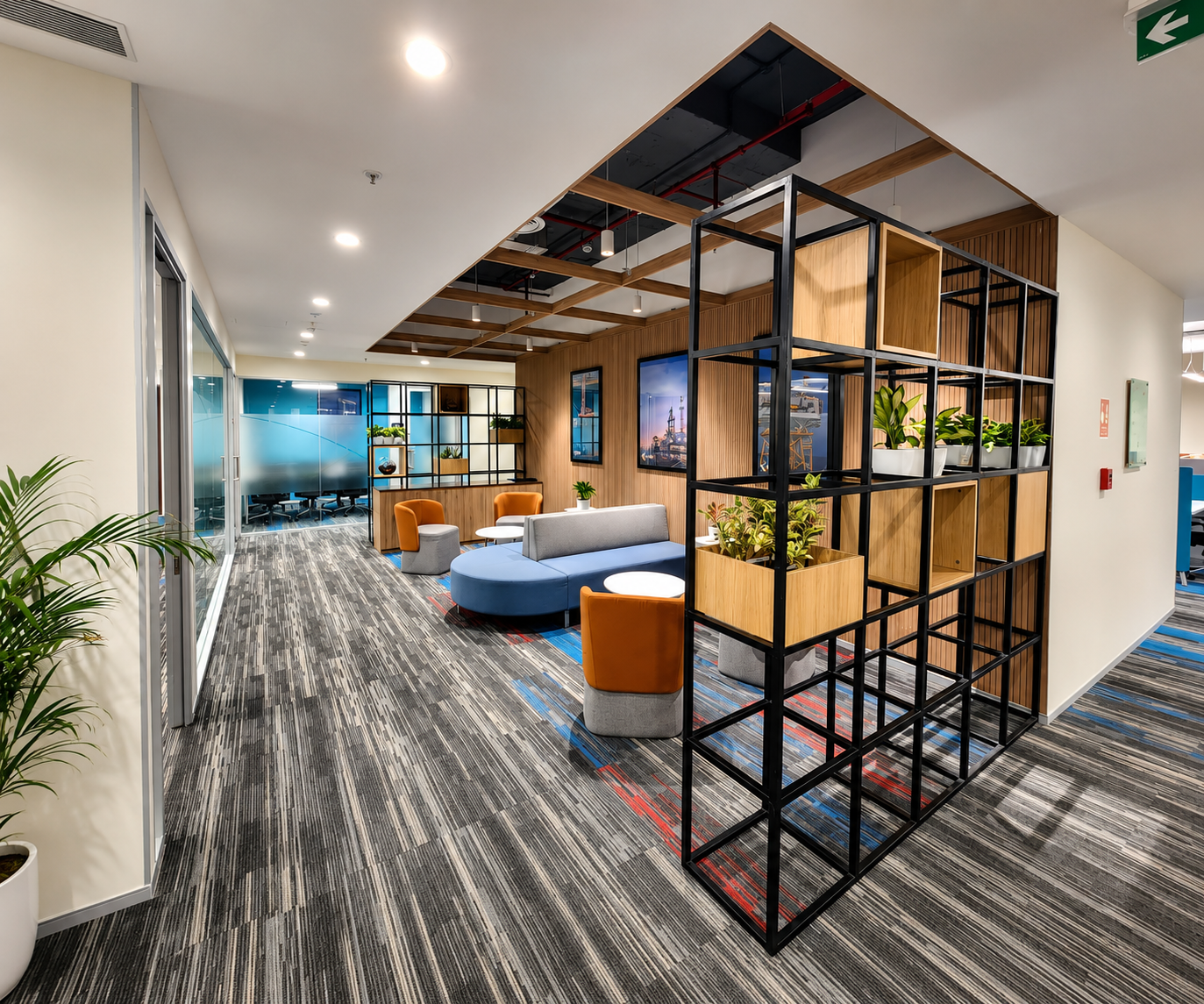
Indicative fit-out cost benchmarks for India-2026 24/7 operations environments: Cat B operations floor ₹3,500–5,200 per sqft; command centre with full video-wall + AV-stack scope ₹6,500–10,500 per sqft; biometric / regulated-access secure operational floors add ₹600–1,200 per sqft over baseline. The workspace is not a cost centre — it is an operational safety system, and the spec stack reflects that.
The Unique Design Requirements of 24/7 Operations Environments
1. Command Centre Architecture
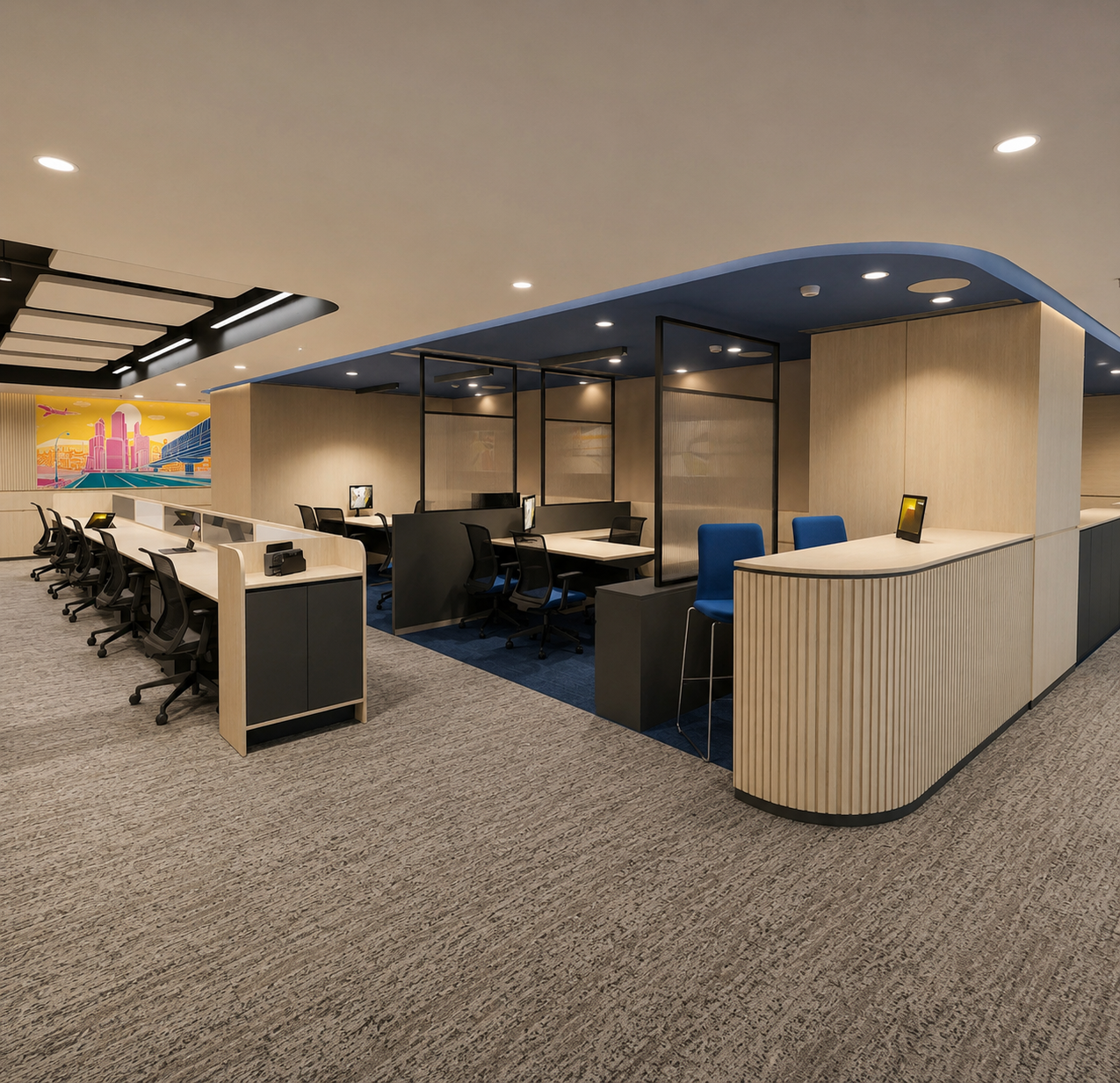
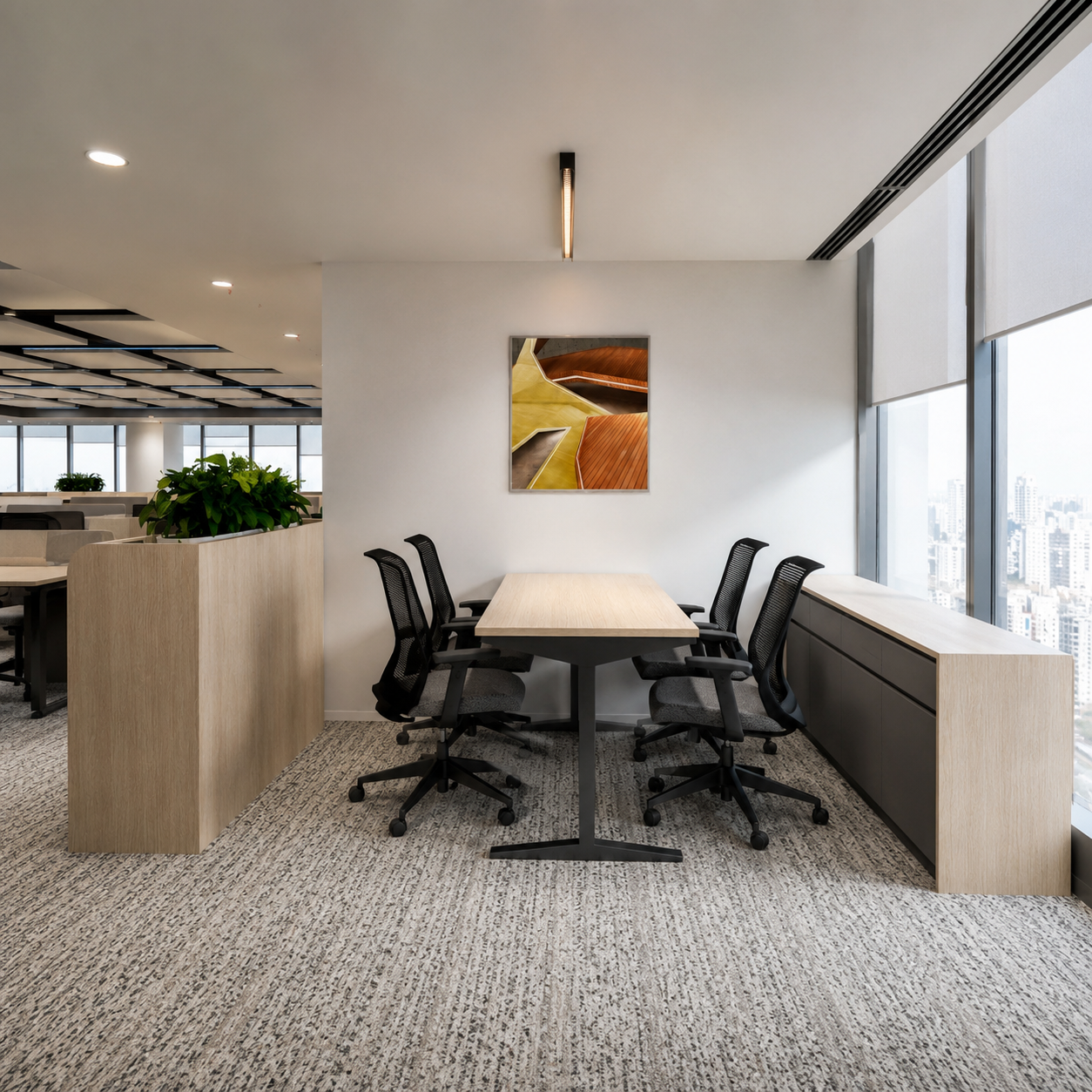
The command centre — the operational heart of an aviation or logistics organisation — has a set of design requirements that differ fundamentally from conventional meeting rooms or open-plan offices. Large-format video wall systems displaying real-time flight tracking, cargo movement data, weather overlays, and network status must be visible from all operator positions. Ergonomic workstations designed for sustained twelve-hour occupancy — with height adjustment, monitor arm systems that allow precise screen positioning, and task lighting that eliminates screen glare — are not a premium option in this context but a basic operational requirement.
The layout of a command centre must balance the need for individual operator focus with the situational awareness that allows supervisors and team leaders to monitor the room’s collective status at a glance. Tiered layouts, clear sightlines to the video wall from all positions, and supervisor stations elevated to provide floor-level visibility are common structural solutions.
2. Circadian Lighting for Shift Workers
Night shift work is associated with well-documented physiological consequences including disrupted sleep, elevated cardiovascular risk, and reduced cognitive performance — factors with direct implications for operational safety in high-stakes environments. Circadian-responsive lighting systems that actively mitigate these consequences are therefore not simply a wellness amenity in aviation and logistics operations offices — they are a risk management provision.
Tunable LED systems that shift colour temperature and intensity across a simulated daylight cycle — increasing blue-spectrum content and intensity during the first half of the shift to promote alertness, then moderating towards warmer, lower-intensity tones as the shift progresses — demonstrably improve alertness and reduce fatigue-related error rates. For night shifts that overlap with the natural dark period, these systems can simulate morning light conditions that partially counteract the physiological impact of working against circadian rhythm.
3. Rest and Recovery Provisions
Aviation and logistics organisations frequently require staff to be available for extended periods or to return to work within short recovery windows. The provision of quality rest facilities — dedicated rest rooms with blackout conditions, acoustic separation from operational areas, comfortable bedding, and individual temperature control — is both a duty of care and a practical operational provision.
Ancillary rest facilities including showers, lockers for shift change, and nutrition provisions available around the clock (not just during standard catering hours) complete the picture of an environment that genuinely supports the operational demands placed on shift workers. These provisions, which are standard in aviation operations globally, remain exceptional in India — creating a significant differentiation opportunity for organisations that invest in them.
4. Security and Access Control
Aviation operations and logistics facilities handling sensitive cargo, regulated materials, or classified freight require layered access control architectures that are more demanding than conventional corporate access management. Biometric access systems at entry points to secure operational areas, CCTV coverage with defined retention periods and access logging, visitor management systems that record and restrict access to specific areas, and the physical separation of client and visitor zones from operational floors are all standard requirements in this sector.
Access control in aviation and logistics operations is also subject to specific regulatory requirements — from BCAS for airport operations to customs and excise regulations for bonded cargo facilities — that must be addressed in the design brief.
5. Fatigue-Mitigating Amenity Design
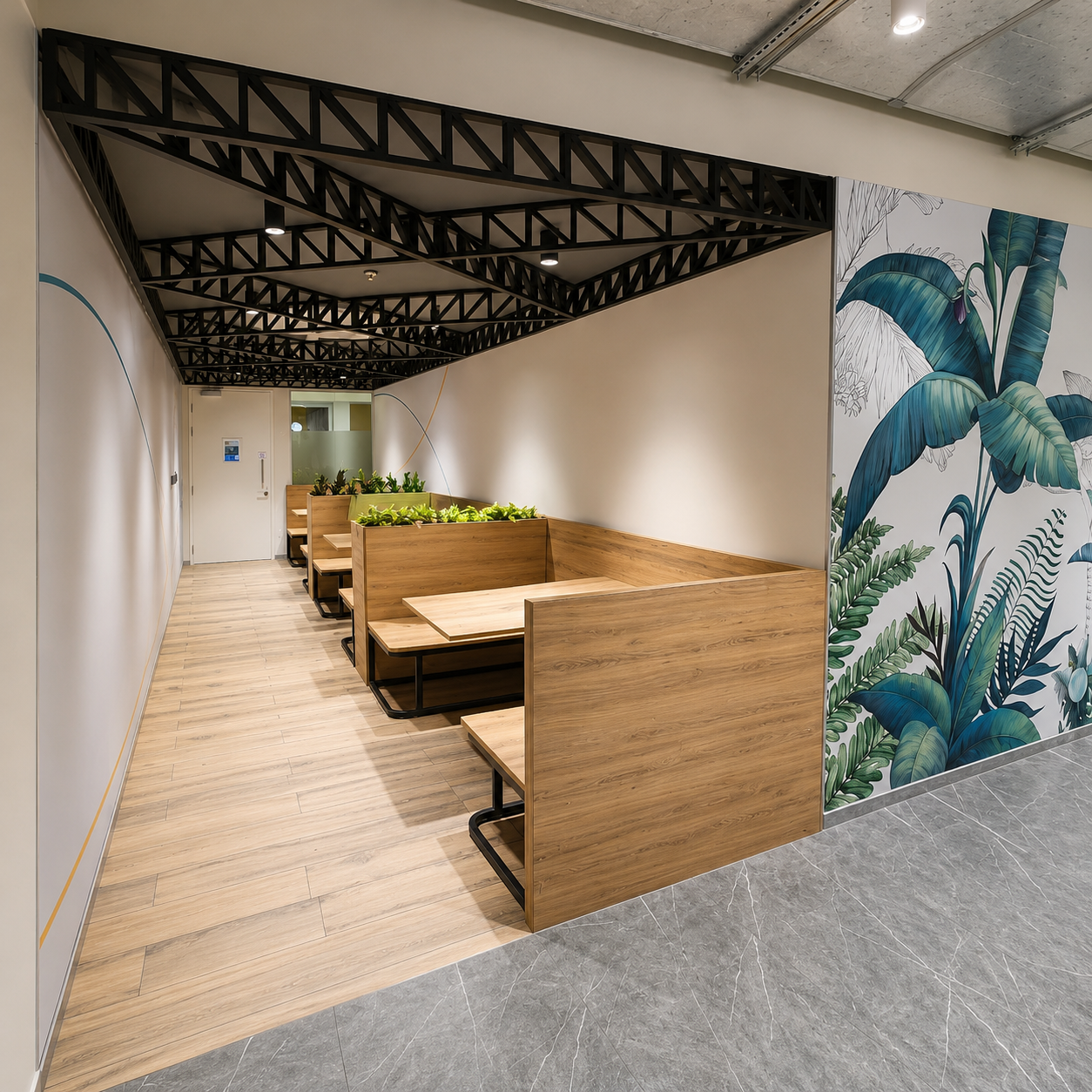
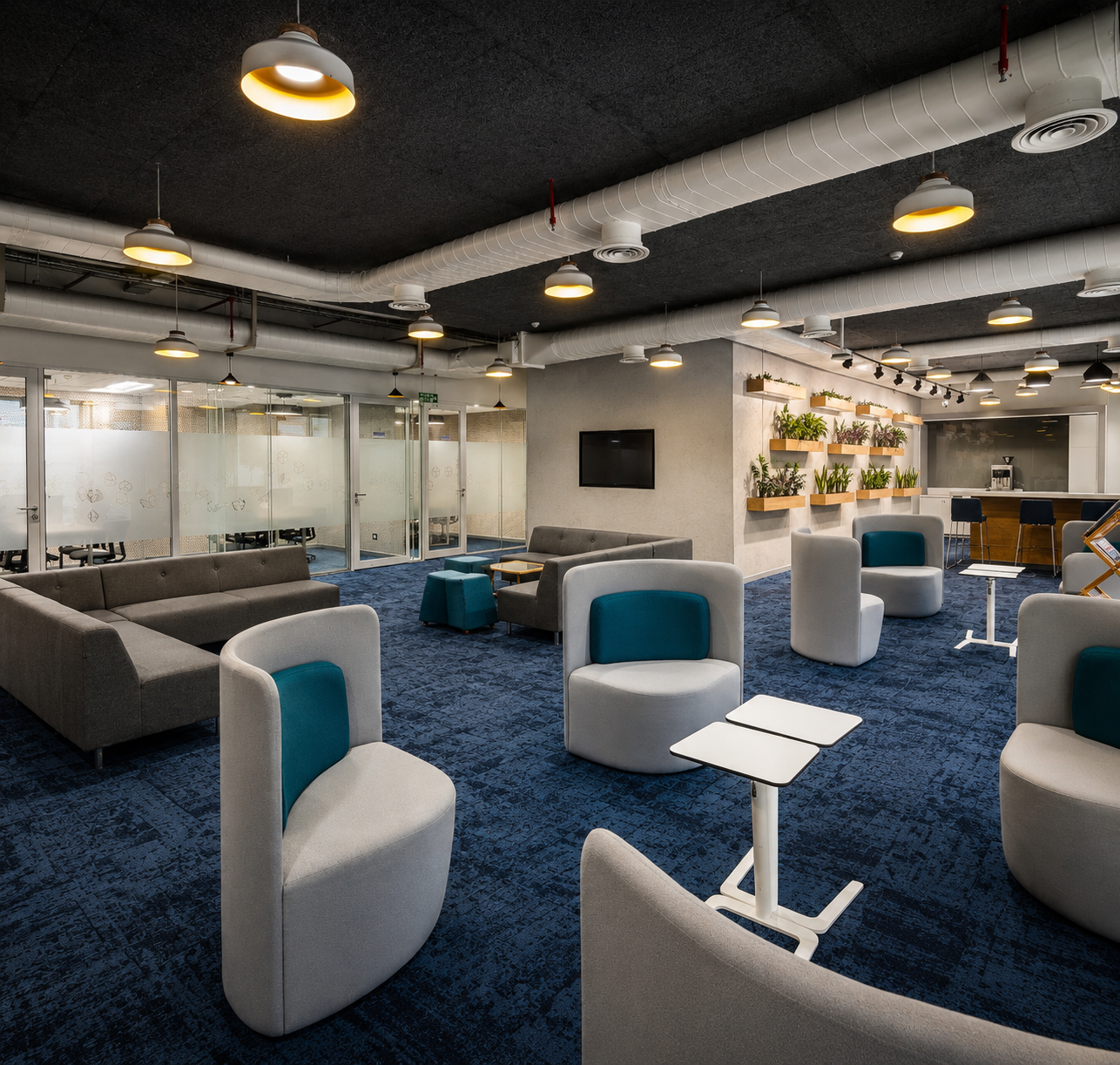
Beyond the provision of rest facilities, the entire amenity environment of an aviation and logistics operations office must be designed with shift-worker fatigue in mind. Pantries and food service provisions that operate 24 hours a day rather than during standard office hours, social zones that provide genuine recovery space during rest breaks, and outdoor access provisions where facility and security constraints permit — these are the details that differentiate an operations environment that retains its staff from one that experiences chronic turnover.
The Eleganz Perspective on Sustainable Fit-Out
Eleganz Interiors has delivered complex, operationally critical workplaces across India’s major logistics and aviation corridors. Our experience with 24/7 operations environments — AV-intensive command centres, shift-worker wellness provisions, biometric access-control integration — is grounded in 38 years of pure design-and-build practice, 1,000+ completed projects, and 40 million-plus sqft of interiors delivered.
Our project management capability across our seven offices — Mumbai, Bengaluru, Hyderabad, Chennai, Delhi NCR, Pune, and Singapore — positions us to deliver aviation and logistics workplace projects wherever India’s operational infrastructure is expanding. Singapore is particularly relevant for aviation: many APAC carrier and freight-forwarder regional HQs sit there, and a single design-and-build accountability line covering both Singapore HQ and India operations centres is a programme advantage on multi-country roll-outs.
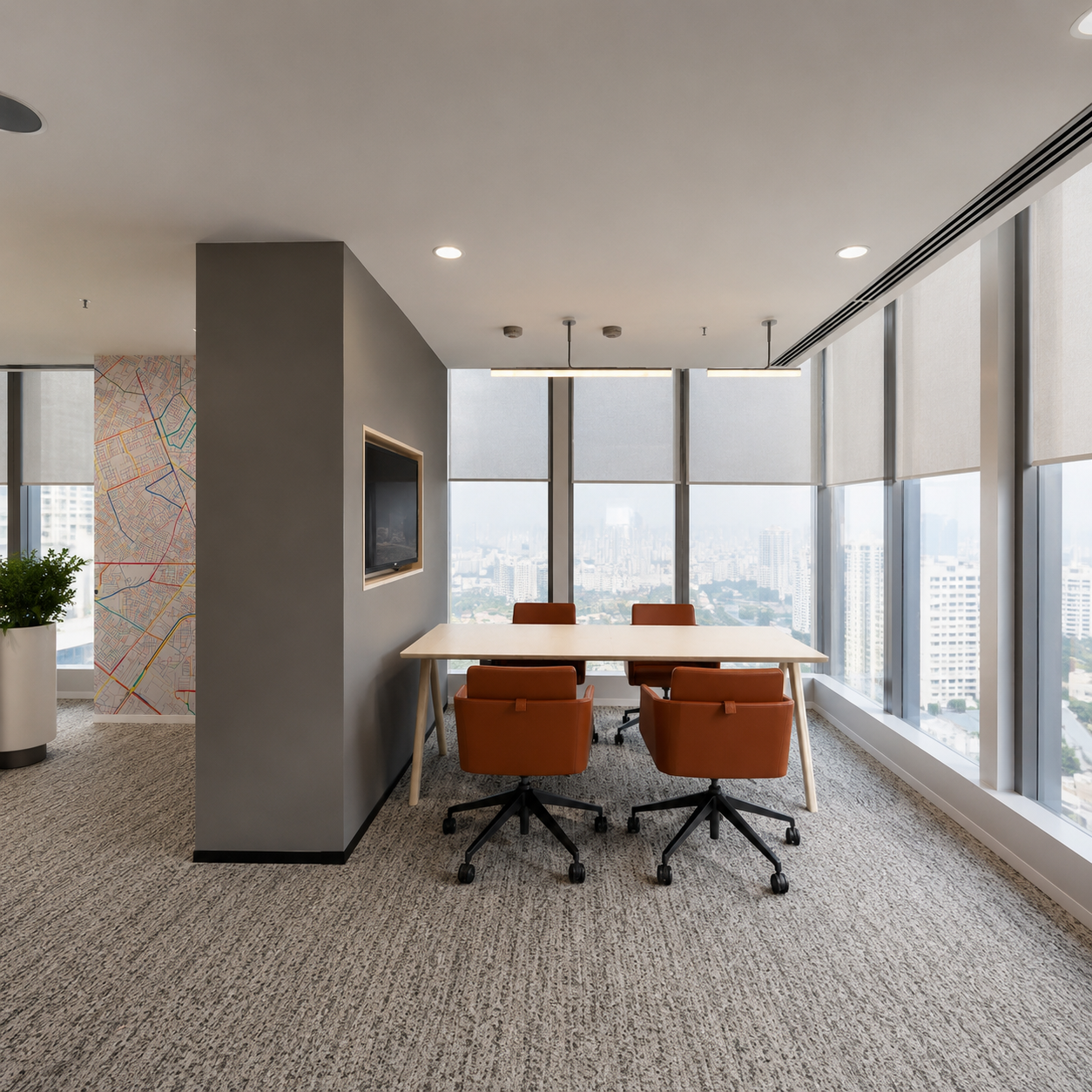
An aviation or logistics operations centre designed for the people who work in it — in all three shifts, every day of the year — is a safer, more reliable, and more productive facility than one designed as a functional minimum.