
Redefining Insurance Workplaces in the Digital Age: Five Design Shifts That Cannot Wait
The Digital Insurance Office: Where the Industry Is and Where It Needs to Be
India’s insurance industry is at an inflection point. Regulatory reforms including IRDAI’s Bima Sugam initiative, the progressive introduction of digital KYC and paperless policy issuance, the entry of insurtech players with mobile-first product architectures, and the rapid adoption of AI-driven claims processing and fraud detection are collectively transforming how insurance is sold, serviced, and administered.
Yet the physical offices where insurance professionals work have, in many cases, changed less dramatically than the products they sell and the systems they use. Filing cabinets remain a physical fixture of branch and operations environments that now process predominantly digital workflows. Manager cabins designed to communicate hierarchy in an era of relationship banking persist in organisations that have adopted flat digital collaboration models. Customer interaction areas designed for face-to-face paper-based transactions remain unchanged in branches that now handle the majority of customer interactions through digital channels.
The BFSI sector — including its insurance segment — is one of India’s most active fit-out occupiers, with branch refresh, ops-hub redesign, and digital-era HQ programmes running in parallel across most major insurers. The question for insurance organisations is whether that investment is being directed toward environments that serve the digital-era organisation, or toward the maintenance of physical configurations designed for an organisation that no longer exists.
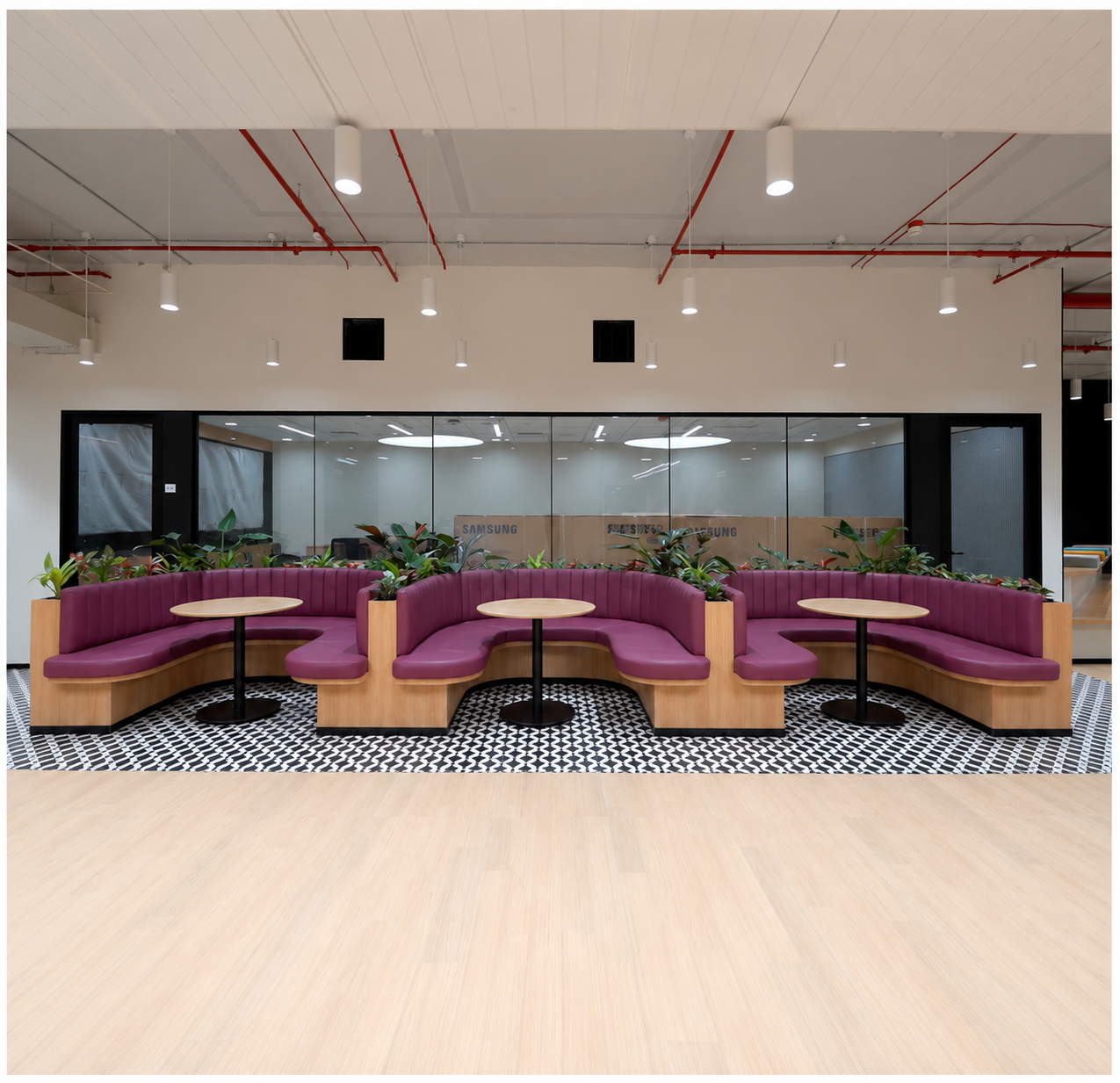
Indicative fit-out cost benchmarks for India-2026 BFSI workplaces: branch / customer experience centre ₹3,500–5,500 per sqft; analytics and underwriting hub Cat B ₹3,000–4,500 per sqft; flagship corporate HQ floor with audit-grade material documentation ₹4,500–7,500 per sqft. BFSI fit-outs uniquely demand traceable documentation per finish — a default deliverable in our pure design-and-build process.
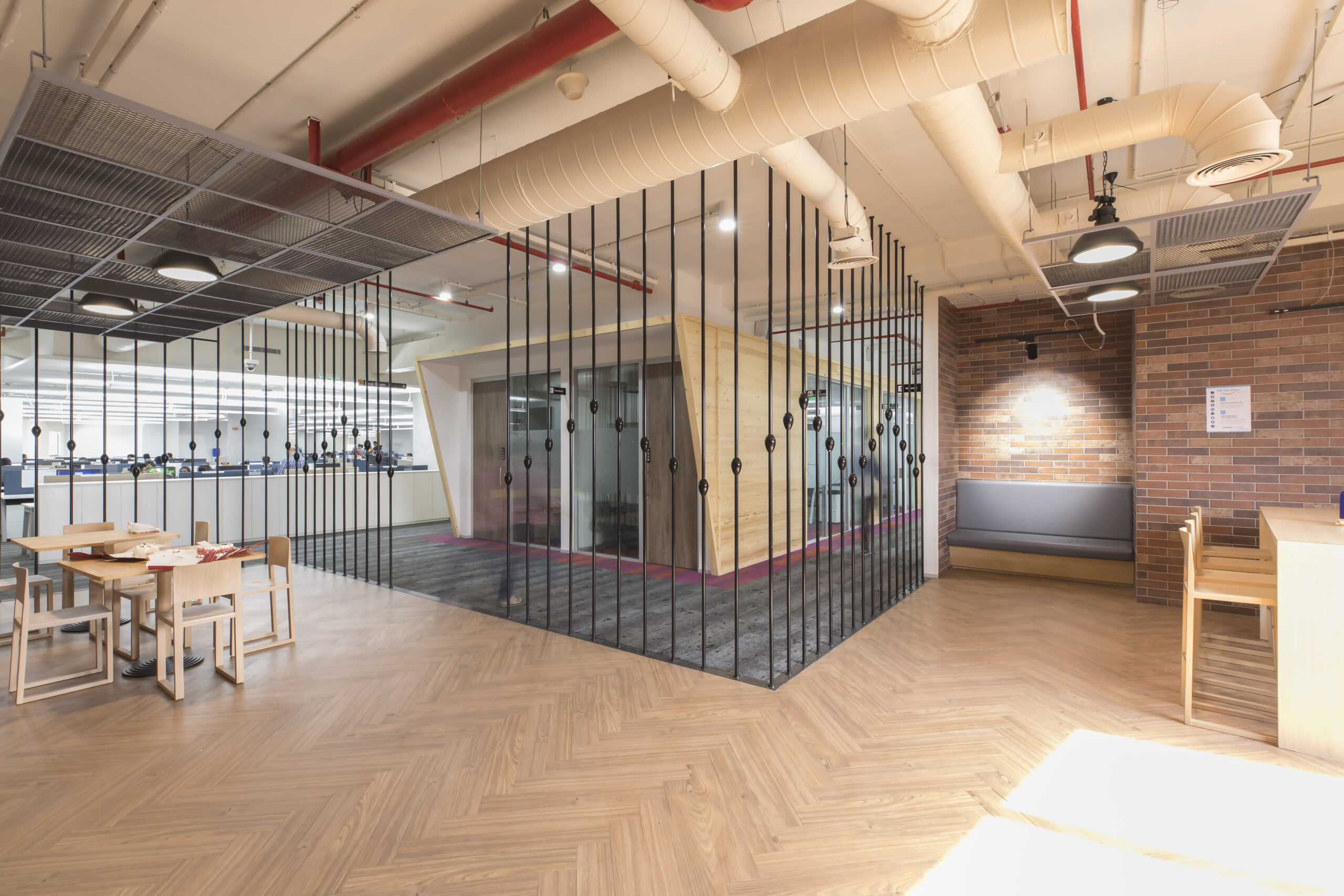
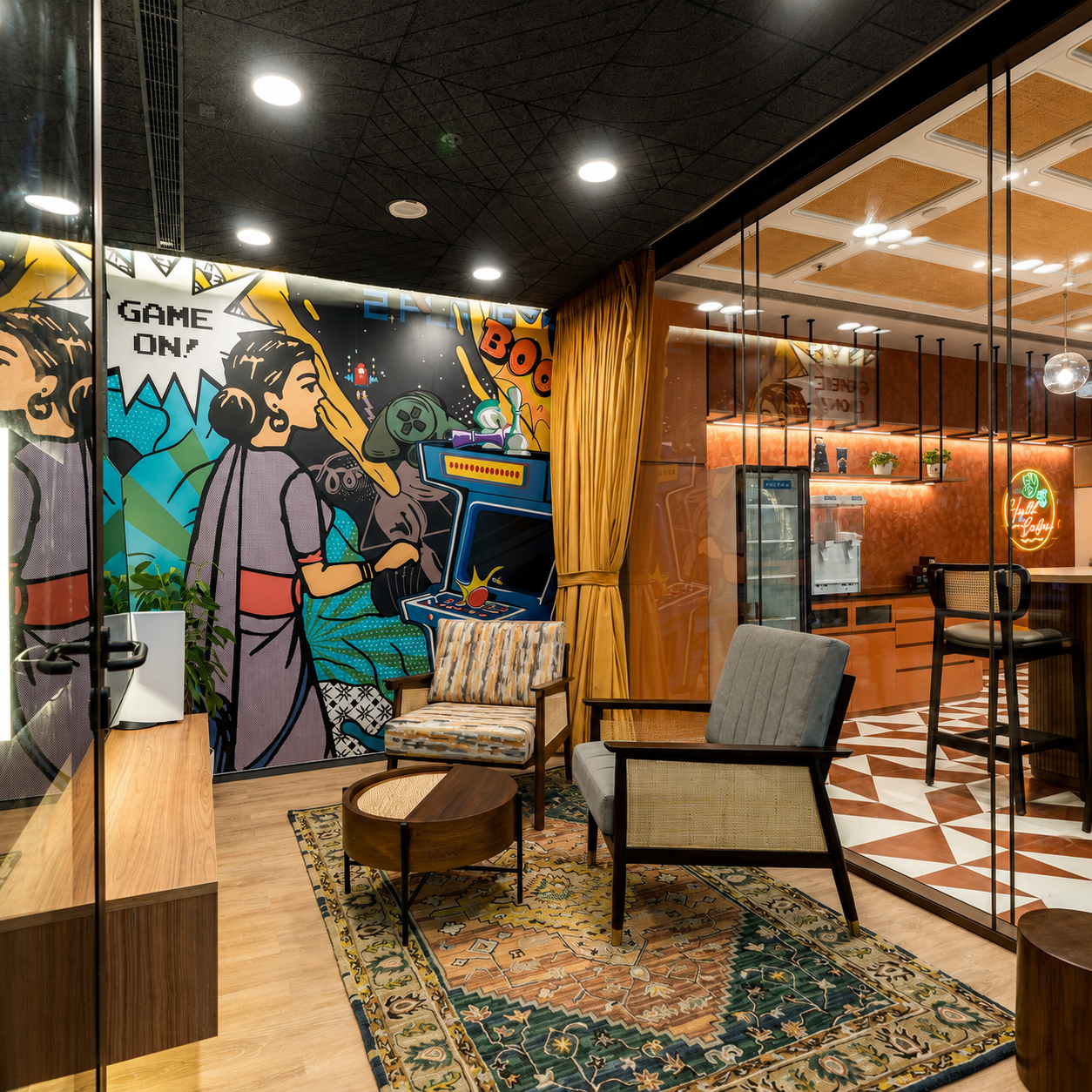
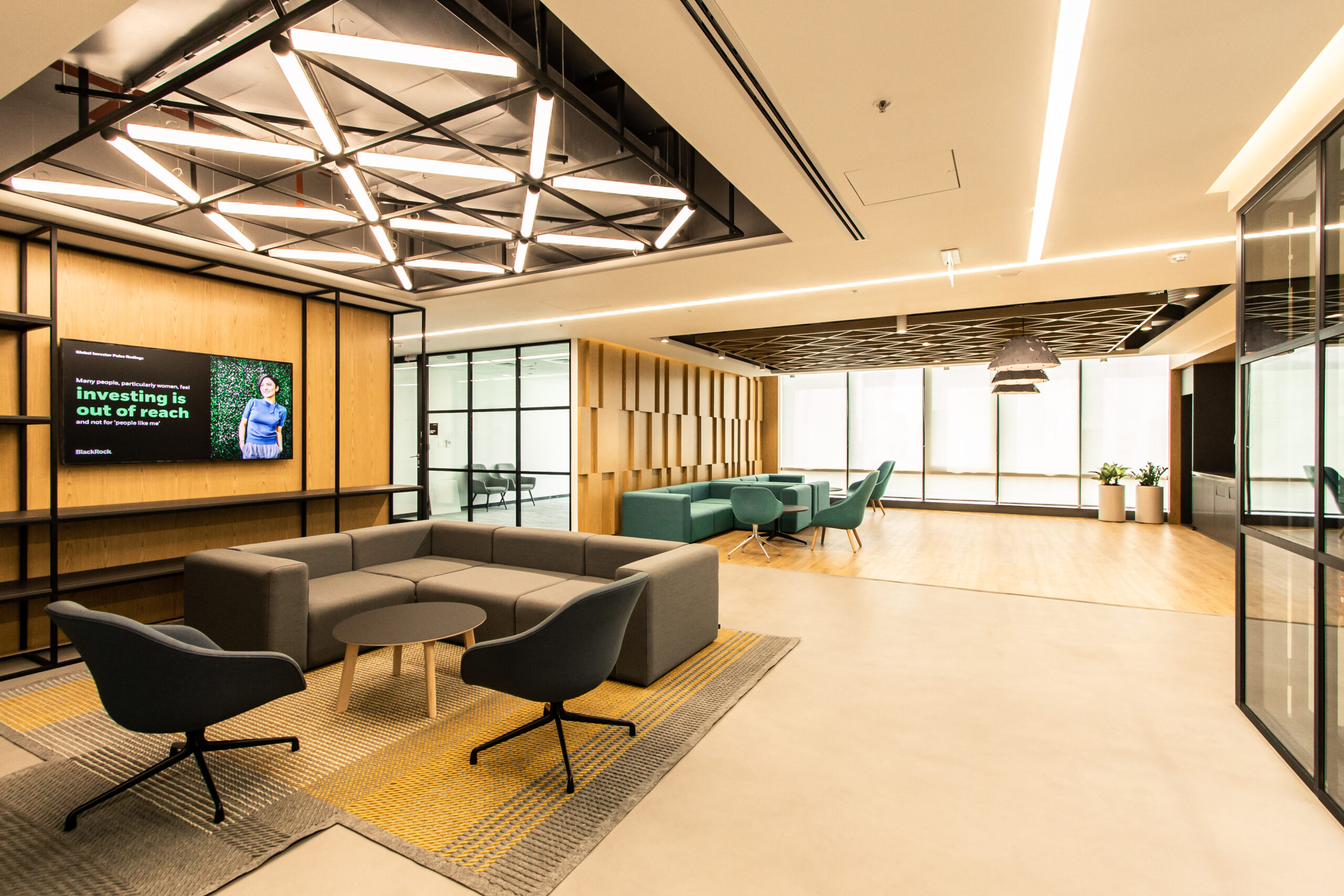
The Net-Zero Office Roadmap: Five Interconnected Steps Five Design Shifts for the Modern Insurance Workplace
1. Paperless Operations Zones
The most visible signal of an insurance organisation’s digital maturity is the physical presence or absence of paper-based storage. Filing cabinets, document trolleys, and paper archives that occupy significant floor area in insurance offices represent both a design and an operational inefficiency — consuming space that could serve people rather than paper, and communicating a message about the organisation’s digital progress that is inconsistent with its stated strategy.
A genuinely paperless operations zone replaces physical document storage with digital workflow infrastructure: dual-monitor workstations that support simultaneous access to policy management systems and document processing applications, clean desk protocols with secure digital storage for individual working documents, and a physical environment that communicates digital-era professionalism rather than administrative legacy.
2. Customer Experience Centres
Insurance is fundamentally a trust product. Customers who engage with an insurer in person — whether for policy enquiry, claims management, or financial planning — are at a moment of either confidence-building or confidence-erosion. The physical environment in which this interaction occurs is a material determinant of which outcome prevails.
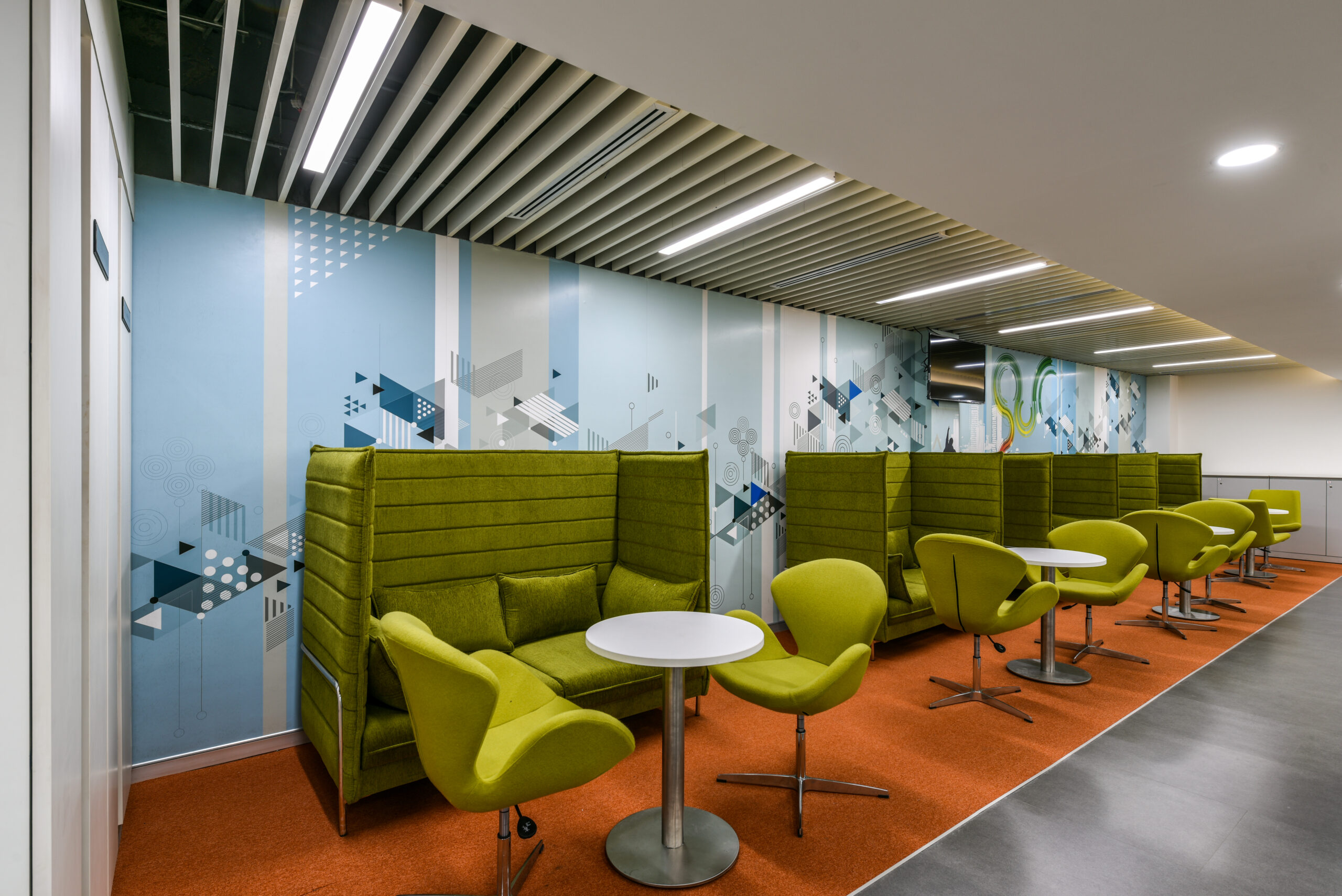
Modern insurance customer experience centres replace the counter-and-queue model of traditional branch design with private consultation rooms that communicate confidentiality and personalised attention, comfortable waiting areas that reduce perceived wait time anxiety, and digital service kiosks that allow customers to initiate and track digital transactions in a physically supported environment. For Bajaj Finserv — a client whose BFSI workplace Eleganz has delivered — the integration of brand identity, customer trust architecture, and operational functionality demonstrates what the best insurance customer environments can achieve.
3. Analytics and Underwriting Hubs
Actuarial, underwriting, and analytics professionals in insurance organisations have specific workspace requirements that are frequently unaddressed in standard office designs. The nature of sustained analytical work — involving complex data sets, multi-screen workflows, and extended periods of deep concentration — demands an acoustic and ergonomic environment more demanding than a standard open-plan workstation.
Dedicated analytics hubs with acoustic enclosure at the cluster level, workstation specifications that include adjustable monitor arms for dual or triple screen configurations, task lighting engineered for extended screen use, and adjacency to informal collaboration spaces that allow spontaneous discussion of analytical findings serve the specific needs of these high-value professional groups.
4. Training and Development Spaces
Insurance organisations invest significantly in product training, compliance education, and professional development — driven both by the complexity of the products they sell and by the regulatory requirements that govern how they are sold. Conventional offices provide poor infrastructure for this investment: conference rooms pressed into training use are acoustically unsuitable, lack appropriate AV infrastructure, and cannot accommodate the range of learning formats — from classroom instruction to small-group simulation to individual digital learning — that contemporary training programmes require.
A purpose-designed training and development space — with modular furniture that reconfigures from classroom to workshop to assessment format, integrated AV systems supporting both presenter and video conference delivery, and acoustic separation from the main office floor — materially improves the effectiveness and cost-efficiency of the organisation’s training investment.
5. Hybrid-Ready Infrastructure Throughout
Insurance operations increasingly involve distributed teams — claims assessors working remotely, underwriters at client sites, compliance officers coordinating across geographies. The office must therefore function as a hybrid hub that supports seamless remote collaboration as well as in-person work.
This requires meeting rooms and focus spaces equipped with conferencing infrastructure of the quality discussed in the IT and BFSI contexts — camera-first room design, ceiling microphone arrays, high-bandwidth connectivity throughout — alongside a desk booking system that allows the significant proportion of employees who now work partially from home to plan their office days effectively.
₹3,000–7,500 / sqft Indicative fit-out cost band across BFSI use-cases — analytics hub to flagship HQ — in India 2026 ₹3,000–7,500 / sqft Indicative fit-out cost band across BFSI use-cases — analytics hub to flagship HQ — in India 2026
10–14 weeks Typical D&B delivery TAT for a 30,000 sqft BFSI ops floor with audit-grade material documentation under a single design-and-build contract
he Eleganz Perspective on Insurance Workplace Design
Eleganz has delivered workplaces for insurance and broader BFSI organisations across India, including Bajaj Finserv and HDFC Bank. Our understanding of the specific requirements of these environments — regulatory compliance provisions, data-security architecture, audit-grade material documentation, and the customer-experience design that drives trust and retention — is grounded in 38 years of pure design-and-build practice, 1,000+ completed projects, and 40 million-plus sqft of delivered interiors. Our seven offices (Mumbai, Bengaluru, Hyderabad, Chennai, Delhi NCR, Pune, and Singapore) cover every major Indian BFSI corridor and the APAC regional-HQ markets that increasingly drive Indian fit-out specification.
The digital transformation of India’s insurance industry is accelerating. The physical workplaces that house this transformation must accelerate with it — not as a statement of aspiration, but as a practical operational requirement.

The insurance workplace that communicates digital-era professionalism to its employees, its customers, and its regulators is one of the most powerful statements an insurance organisation can make about where it is going.